





What's Happening?
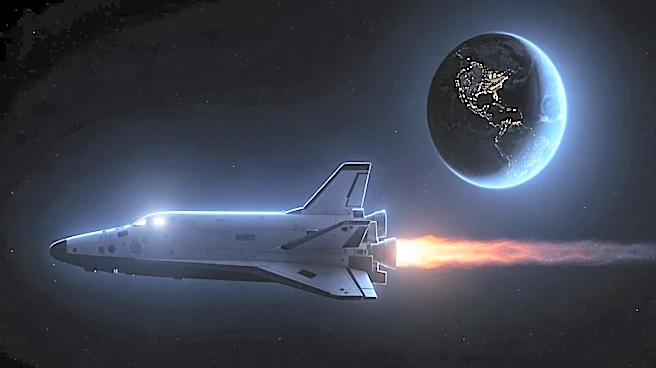
The Artemis II mission, launched on April 1, 2026, is NASA's first crewed mission around the moon in over 50 years. The mission includes astronauts Reid Wiseman, Victor Glover, Christina Koch, and Jeremy Hansen. The mission aims to capture views of the moon's
dark side and test technologies for future Mars missions. Former NASA administrator Jim Bridenstine highlighted that political risks have historically hindered lunar exploration, suggesting that without these challenges, humans might have already reached Mars. The mission represents a step towards overcoming these obstacles and advancing human space exploration.
Why It's Important?
The Artemis II mission underscores the impact of political decisions on space exploration. Political risks and budgetary constraints have delayed lunar missions for decades, affecting the pace of technological advancements. The mission's success could shift political priorities, encouraging sustained investment in space exploration. It also highlights the importance of international collaboration, as the mission includes a Canadian astronaut, Jeremy Hansen. The mission's progress could influence future policies and inspire a new era of exploration, potentially leading to human missions to Mars.
What's Next?
As Artemis II progresses, NASA will gather data to inform future missions, including Artemis III, which aims to land humans on the moon. The mission's success could bolster political and public support for continued investment in space exploration. The outcomes may influence future policy decisions, potentially reducing political risks and ensuring sustained funding. The mission's progress will be closely monitored, with potential implications for international collaboration and the future of human space exploration.