






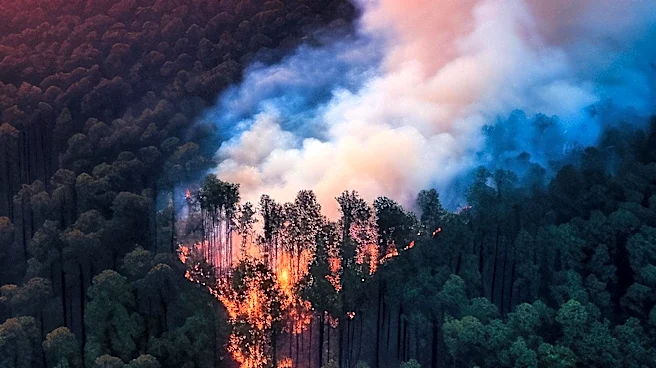
What's Happening?
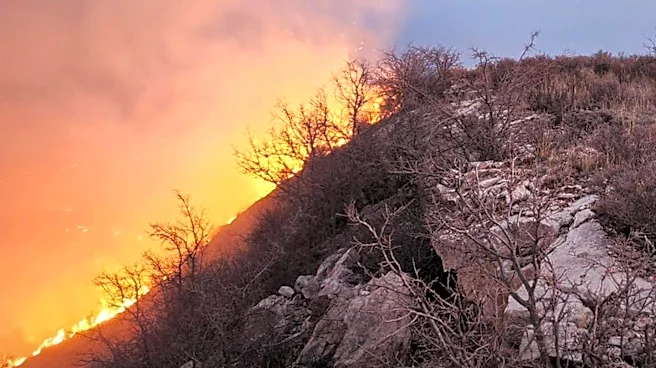
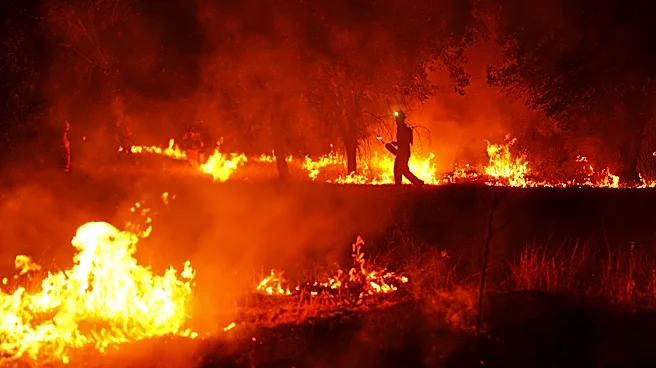
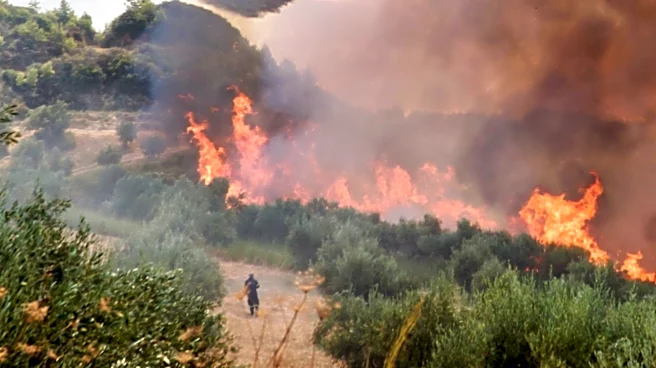
Spanish Prime Minister Pedro Sánchez has declared areas affected by recent wildfires as 'disaster zones' and emphasized the urgent need to combat climate denial. The wildfires, which have been raging across Spain, have caused significant damage and forced
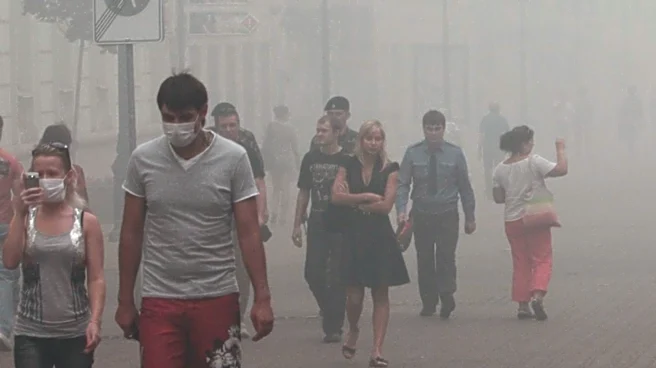
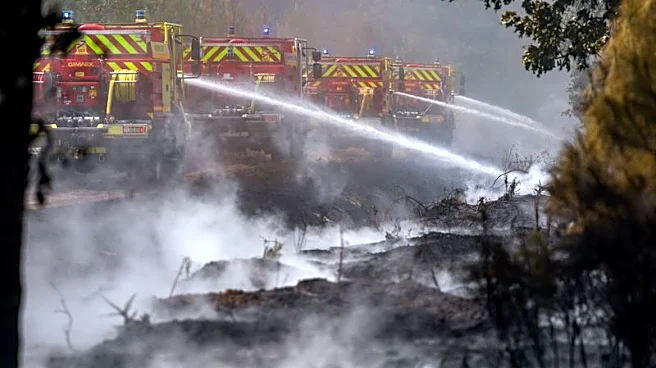
evacuations. Sánchez highlighted the progress made in controlling the fires but warned of the challenges posed by an upcoming heatwave. He called for unity in addressing the climate emergency and urged regional governments to reject climate denial. The wildfires have affected nearly 100,000 people, with over 63,000 evacuated and another 35,000 confined to their homes. Firefighters are working to control the fires in various regions, including Ávila and Madrid, where fire fronts have merged.
Why It's Important?
The wildfires in Spain underscore the growing impact of climate change and the urgent need for coordinated action. The declaration of disaster zones allows for the mobilization of resources and support for affected communities. The situation highlights the vulnerability of regions to extreme weather events and the importance of addressing climate denial, which can hinder effective responses to such emergencies. The wildfires have significant implications for public safety, environmental conservation, and economic stability, affecting local communities and potentially disrupting tourism and agriculture.
What's Next?
As Spain braces for a new heatwave, firefighting efforts are expected to become more challenging. Authorities are on high alert, with the State Meteorological Agency forecasting soaring temperatures that could exacerbate the fire risk. The government is likely to continue its focus on strengthening wildfire prevention measures and modernizing firefighting capabilities. Regional governments may face pressure to implement more robust climate policies and collaborate on cross-party agreements to address the climate crisis effectively.