






What's Happening?
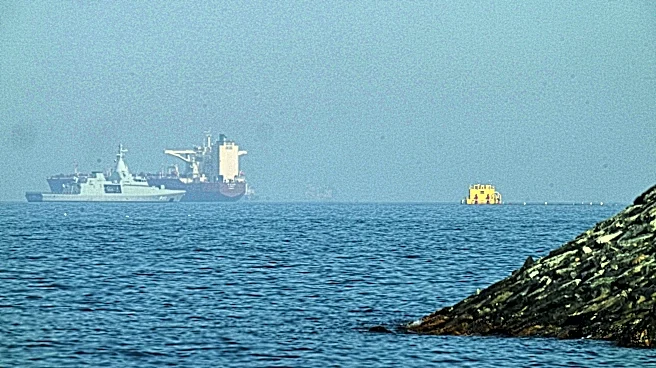
Pakistani Prime Minister Shehbaz Sharif has been actively engaging in diplomatic efforts to extend a ceasefire and reach a peace deal involving the U.S. and Iran. This comes amid a tenuous ceasefire that appears to be holding after the U.S. disabled two
Iranian oil tankers attempting to breach a blockade of Iran's ports. Bahrain, which hosts the U.S. Navy's regional headquarters, has arrested 41 individuals allegedly linked to Iran's Islamic Revolutionary Guard Corps. The situation is part of broader regional tensions involving multiple countries, including Russia and Saudi Arabia, which are advocating for a sustainable, long-term agreement to end the conflict.
Why It's Important?
The diplomatic efforts led by Pakistan and supported by other nations like Russia and Saudi Arabia are crucial in maintaining regional stability and preventing further escalation. The involvement of major powers highlights the geopolitical significance of the region, particularly concerning energy security and global economic stability. The arrests in Bahrain and the ongoing blockade of Iranian ports underscore the complex interplay of military and diplomatic actions that could have far-reaching implications for international relations and regional peace.
What's Next?
The continuation of diplomatic talks and efforts to extend the ceasefire are expected, with potential reactions from major stakeholders like the U.S., Iran, and other regional powers. The situation remains fluid, with the possibility of further military or diplomatic developments. The international community will likely monitor the situation closely, given its potential impact on global energy markets and regional security dynamics.