


What's Happening?
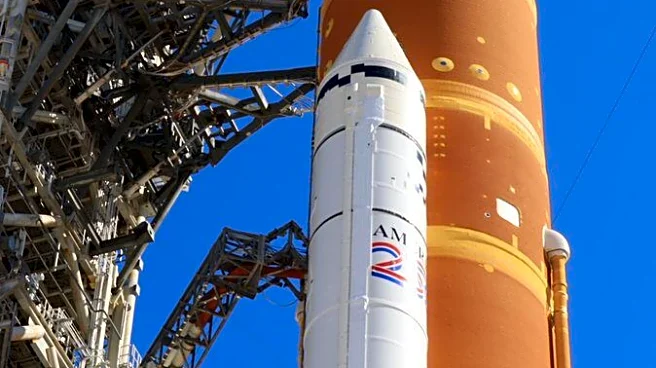
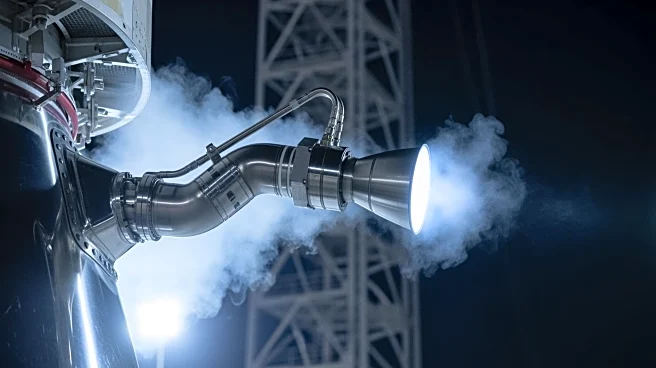
NASA is addressing a technical issue with the Artemis II mission's Space Launch System (SLS) rocket, which is scheduled to carry astronauts around the Moon. The problem involves an interruption in helium flow in the rocket's interim cryogenic propulsion
stage, which is crucial for the launch. This issue was detected during overnight observations on February 21, 2026, at the Kennedy Space Center in Florida. As a result, NASA is considering rolling back the rocket and Orion spacecraft to the Vehicle Assembly Building for further troubleshooting. The launch window, initially set for March 6-9 and March 11, is now likely to be impacted, potentially delaying the mission by at least three weeks.
Why It's Important?
The Artemis II mission is significant as it marks the first crewed mission beyond low Earth orbit since the Apollo era, aiming to send astronauts around the Moon. Any delay in this mission could affect NASA's timeline for future lunar exploration and the broader Artemis program, which aims to establish a sustainable human presence on the Moon. The delay could also impact international collaborations, as the mission includes a Canadian astronaut. The technical issue highlights the complexities and challenges of space exploration, emphasizing the need for rigorous testing and troubleshooting to ensure the safety and success of such missions.
What's Next?
NASA is actively reviewing data and preparing for potential rollback operations to address the helium flow issue. Engineers are determining the best course of action to resolve the problem, with preparations underway to remove pad access platforms that could be affected by high winds. The agency will continue to provide updates as they work towards resolving the issue and rescheduling the launch. The next available launch window, if the March dates are missed, begins on April 1, 2026.