







What's Happening?
Researchers at Boston University, in collaboration with the Max Planck Institute for Biological Intelligence and the MRC Laboratory of Molecular Biology, have uncovered a unique phenomenon in the brains of zebra finches that could have implications for understanding
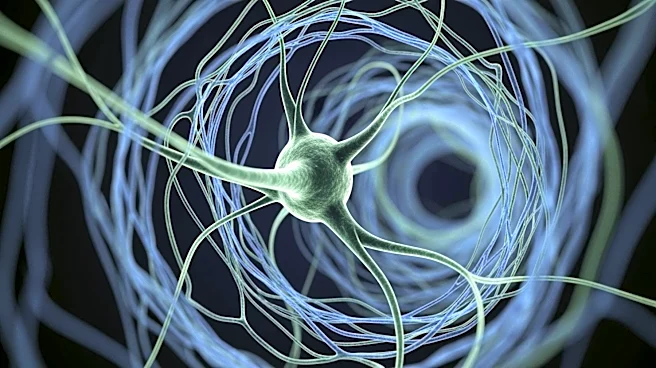
human neurogenesis. The study, published in Current Biology, reveals that new neurons in the adult zebra finch brain tunnel through existing brain structures rather than circumventing them. This discovery was made using high-resolution electron microscopy, which allowed the team to observe the intricate interactions between migrating neurons and their environment. The findings suggest that this tunneling behavior might explain why humans have limited capacity for brain tissue regeneration, potentially leaving us more vulnerable to neurodegenerative disorders.
Why It's Important?
The discovery of neuron tunneling in zebra finches provides a new perspective on the limitations of human neurogenesis. In humans, neurogenesis is largely restricted after birth, which may be a protective mechanism to preserve existing neural connections and memories. Understanding the mechanisms behind neuron migration in birds could lead to breakthroughs in regenerative medicine, particularly in developing therapies for neurodegenerative diseases like Alzheimer's. The study also highlights the potential for using stem-cell therapies to stimulate neurogenesis in humans, bypassing the need for glial scaffolds, which are typically lost after birth. This research underscores the importance of comparative studies in animal models to uncover biological processes that could be harnessed for human health benefits.
What's Next?
The research team is now focusing on identifying the genes that regulate neurogenesis in zebra finches using single-cell RNA sequencing. This approach aims to understand how migrating neurons communicate with other cells and determine their integration points within existing neural circuits. The findings could pave the way for developing targeted therapies that promote brain repair and regeneration in humans. Additionally, the study opens up new avenues for exploring the structural and functional plasticity of mature neural circuits, which could have far-reaching implications for treating brain injuries and neurodegenerative conditions.
Beyond the Headlines
The study's findings also draw parallels between neuron tunneling and the behavior of metastatic cancer cells, which similarly deform their microenvironments to navigate dense tissues. This suggests a conserved strategy among specialized migratory cells, offering insights into both neurogenesis and cancer biology. The research challenges the traditional view that glial scaffolds are necessary for neuron migration, proposing that alternative pathways could be leveraged for therapeutic purposes. By studying the zebra finch, a species known for its robust neurogenesis, scientists hope to unlock new strategies for enhancing brain plasticity and resilience in humans.