



What's Happening?
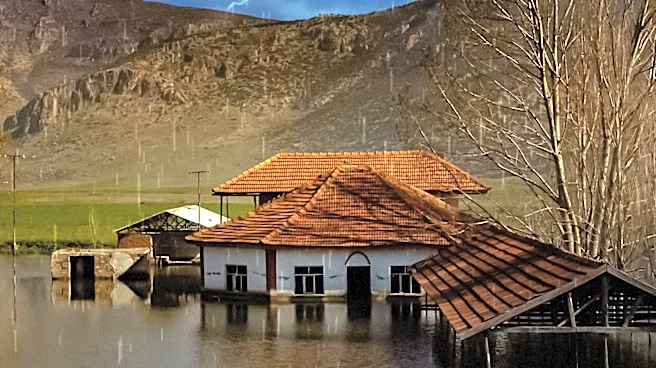
Heavy rainfall has impacted eastern Japan, leading to a fatality and widespread disruptions. The Japan Meteorological Agency (JMA) issued a special landslide warning for Niijima island after recording over 480 millimeters of rain in 24 hours, marking
the largest amount since local records began. A woman in her 60s died in Iwaki, Fukushima Prefecture, after her car became submerged in an underpass. Additionally, two individuals sustained minor injuries in Chiba due to falls caused by the heavy rain. The JMA also issued a level 4 landslide alert for parts of Chiba and Saitama prefectures, which neighbor Tokyo. The downpours have disrupted train services and led to school closures in affected areas, including Tokyo. The agency anticipates that rainbands capable of producing localized torrential downpours will develop in the northeastern Tohoku region as a seasonal rain front moves northward. The central government has established a liaison headquarters at the prime minister's office to evaluate potential damage and coordinate emergency responses.
Why It's Important?
While this event directly impacts Japan, it underscores the increasing global challenges posed by extreme weather phenomena, which have indirect implications for U.S. interests. The disruption to transportation and daily life in a major economic hub like Tokyo could have ripple effects on international supply chains and business operations, potentially affecting U.S. companies with investments or partnerships in Japan. The fatality and injuries highlight the human cost of such events, prompting discussions on disaster preparedness and infrastructure resilience that are relevant to U.S. communities facing similar weather patterns. Furthermore, the JMA's warnings about prolonged torrential downpours and the establishment of a government liaison headquarters demonstrate a proactive approach to disaster management, offering lessons that could inform U.S. emergency response strategies. The record rainfall on Niijima also serves as a stark reminder of the escalating intensity of weather events, which is a shared concern for both nations in the context of climate change and its broader economic and social impacts.
What's Next?
The Japan Meteorological Agency is forecasting continued rainfall in wide areas facing the Pacific as warm and damp air approaches the rain front stretching along the main island of Honshu. Residents in affected regions, particularly those under landslide alerts, are advised to maintain maximum vigilance. The central government's liaison headquarters will continue to assess damage and streamline emergency responses, which may include further advisories, evacuation orders, or resource deployment. Local authorities will likely focus on restoring disrupted train services and reopening schools as weather conditions permit. There will also be ongoing efforts to monitor the development of rainbands in the Tohoku region. The incident in Iwaki, involving a submerged car and a fatality, may prompt reviews of urban drainage systems and underpass safety protocols in areas prone to heavy flooding. The long-term focus will likely shift towards enhancing infrastructure resilience and improving early warning systems to mitigate the impact of future extreme weather events.
Beyond the Headlines
The severe weather event in Japan, characterized by record rainfall and a fatality, highlights the broader implications of climate change and its impact on urban and island communities. The unprecedented rainfall on Niijima island underscores the increasing intensity and unpredictability of weather patterns, challenging existing infrastructure and disaster preparedness frameworks. This event could accelerate discussions within Japan regarding climate adaptation strategies, including investments in more robust flood defenses and early warning systems. Ethically, the incident raises questions about the responsibility of local governments to protect citizens from extreme weather, particularly in vulnerable areas like underpasses. Culturally, such events often reinforce community solidarity and resilience, but also expose societal vulnerabilities. For the U.S., this situation serves as a case study in managing climate-related disasters in densely populated and geographically constrained regions, offering insights into urban planning, emergency response, and public awareness campaigns that could be adapted for American cities facing similar environmental threats. The economic disruption, even if localized, also points to the need for global collaboration on climate resilience to safeguard international trade and stability.