



What's Happening?
A nationwide ground stop for flights across the U.S. occurred after an L3Harris Technologies contractor crew was working on the Federal Aviation Administration (FAA) air traffic control network. Transportation Secretary Sean Duffy stated that the crew was at a remote
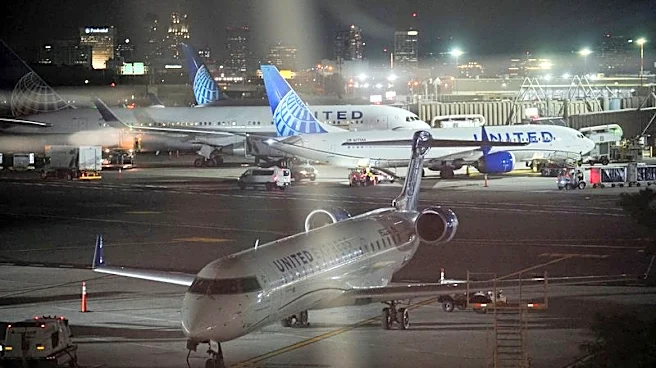
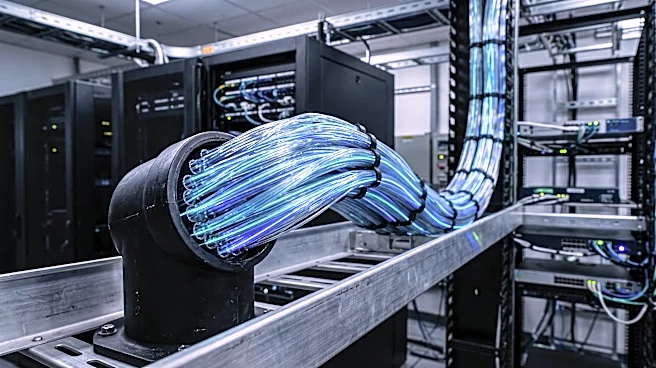
FAA site on Friday afternoon, switching telecommunication lines from old copper wire to fiber. This fiber upgrade work has been ongoing for months across numerous facilities. During this process, a router began to flood other routers within the air traffic control system with over 1,000 connection attempts every four to five seconds. The instability in radar and communications began at 3:36 p.m. ET, leading to the system shutdown. The FAA ordered a nearly five-hour nationwide ground stop, marking the longest such halt since September 11, 2001. Once the issue at the remote site was isolated, all systems came back online. Officials are currently investigating whether the incident was due to user error by the L3Harris crew or a faulty router. Cyberattack and AI-related theories have been ruled out.
Why It's Important?
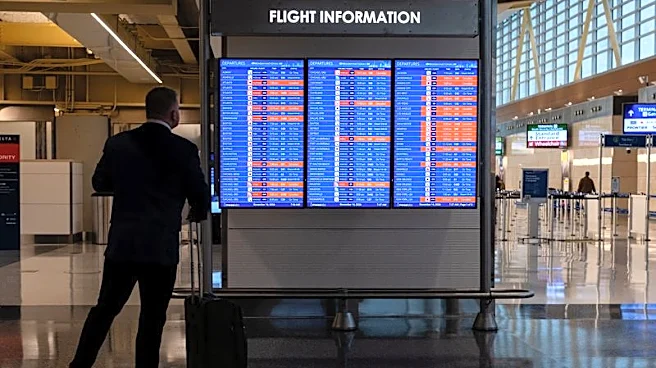
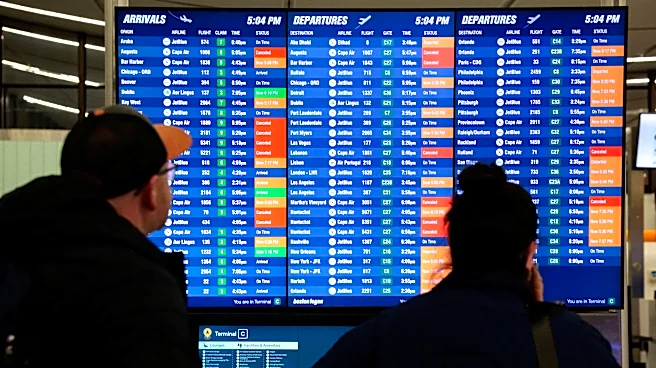
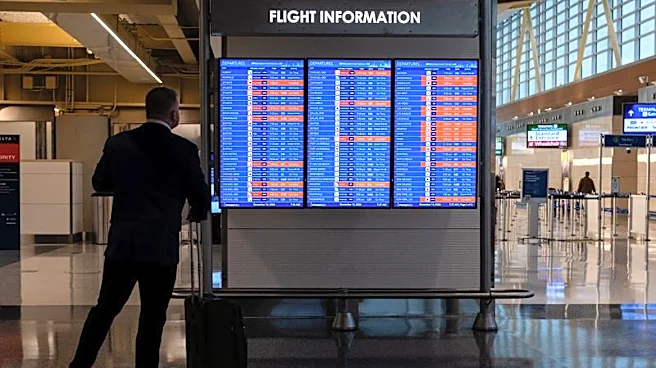
This incident highlights critical vulnerabilities within the U.S. air traffic control infrastructure and its reliance on private contractors for essential upgrades. The extensive flight cancellations and delays—over 9,100 on Friday and thousands more on Saturday—caused significant disruption for travelers and substantial financial impact on airlines. While airlines are offering free rebooking, they are not required to compensate passengers for hotels or meals because the FAA caused the delays. For L3Harris Technologies, a company heavily reliant on government contracts, the incident raises questions about its operational reliability and competence, especially given a similar router misconfiguration incident in 2009 involving a predecessor company. The event also underscores the urgent need for modernization of the FAA's network, with Secretary Duffy now seeking $50 billion from Congress for a complete rebuild, an increase from his previous request of $30 billion. The stock market reacted negatively, with L3Harris shares falling over 4% in after-hours trading, and airline stocks also experiencing declines.
What's Next?
The immediate next step involves determining the exact cause of the router malfunction: whether it was user error by the L3Harris crew or a defective router. This finding will significantly influence the perception of L3Harris and could impact its future government contracts. Secretary Duffy's push for increased congressional funding—now $50 billion—to rebuild the air traffic control system will likely gain momentum following this incident, potentially leading to legislative action. The FAA had already selected AT&T in August to lead a replacement network, and this event may accelerate that transition. Travelers affected by the cancellations should continue to utilize airline rebooking options, being mindful of waiver dates. For L3Harris investors, the company's performance and its relationship with government agencies will be under increased scrutiny, particularly as investigations unfold and the FAA pursues its modernization plans.
Beyond the Headlines
This event exposes deeper issues regarding the aging infrastructure of critical national systems and the complexities of outsourcing their maintenance and upgrades to private entities. The reliance on a single contractor, L3Harris, for a network that Secretary Duffy stated the FAA is 'stuck with' until a new one is built, points to potential monopolistic or deeply entrenched contractual relationships that can create single points of failure. The incident also brings to the forefront the balance between cost-efficiency in government contracts and the imperative for robust, fail-safe national infrastructure. The long-term implications could include a re-evaluation of how critical national systems are managed, funded, and upgraded, potentially leading to more stringent oversight of contractors and increased direct government investment in infrastructure projects. Furthermore, the public's trust in air travel safety and reliability may be impacted, prompting calls for greater transparency in infrastructure management.