


What's Happening?
Greek Cypriot and Turkish Cypriot leaders have reached an agreement to open two new border crossings, coordinate on emergency responses, and share archival materials. This development is part of a United Nations-backed initiative aimed at restarting peace
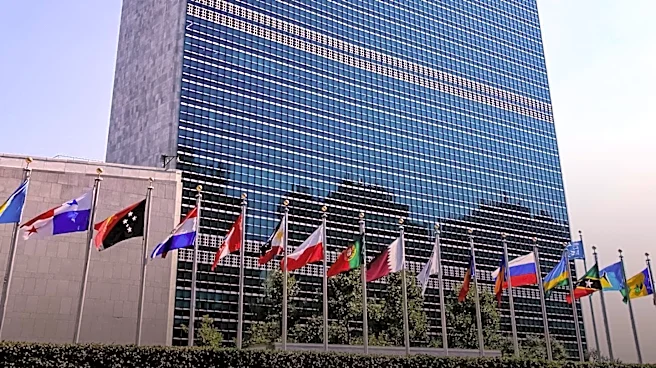
talks after nearly a decade of stalemate. The agreement was made during a four-hour meeting between Greek Cypriot leader Nikos Christodoulides and Turkish Cypriot leader Tufan Erhurman, alongside UN special envoy Maria Angela Holguin, in a UN-controlled buffer zone. This brings the total number of open crossings on the divided Mediterranean island to 11. The UN described the meeting as 'positive,' and further discussions are scheduled to take place in the coming weeks with UN Secretary-General Antonio Guterres.
Why It's Important?
This agreement marks a significant step towards de-escalation and potential reunification efforts in Cyprus, an island divided since a 1974 Turkish invasion. The coordination on emergency responses could improve humanitarian aid and disaster management across the island, benefiting both communities. The sharing of archival materials is crucial for addressing historical grievances and building trust, which are essential for any lasting peace agreement. The opening of new border crossings facilitates greater interaction and economic exchange between Greek Cypriots and Turkish Cypriots, potentially fostering a sense of shared community and reducing long-standing divisions. The involvement of the UN Secretary-General underscores the international community's commitment to resolving the Cyprus issue, which has broader implications for regional stability in the Eastern Mediterranean.
What's Next?
The Greek Cypriot and Turkish Cypriot leaders are expected to meet again in the coming weeks, with UN Secretary-General Antonio Guterres present, to continue their discussions. The focus will be on resuming comprehensive peace talks before the end of the Secretary-General's term. Further discussions are also anticipated regarding the potential opening of additional crossing points. The success of these future talks will depend on the leaders' ability to overcome disagreements on ground rules and address contentious issues, such as the role Turkey would play in the island's future. The international community will closely monitor these developments, as a resolution in Cyprus could set a precedent for other protracted conflicts.
Beyond the Headlines
The agreement to coordinate emergency responses highlights a practical area where cooperation can yield immediate benefits, potentially paving the way for broader collaboration. The sharing of archival materials touches upon the complex historical narratives that have fueled the conflict, suggesting a willingness to confront and reconcile differing perspectives. The long-standing division of Cyprus has created distinct economic and social structures in both parts of the island. Increased cross-border movement and cooperation could lead to economic integration and cultural exchange, but also raise questions about maintaining distinct identities. The ongoing efforts to resolve the Cyprus issue reflect a broader international trend towards diplomatic solutions for long-standing conflicts, emphasizing dialogue and cooperation over confrontation.