



What's Happening?
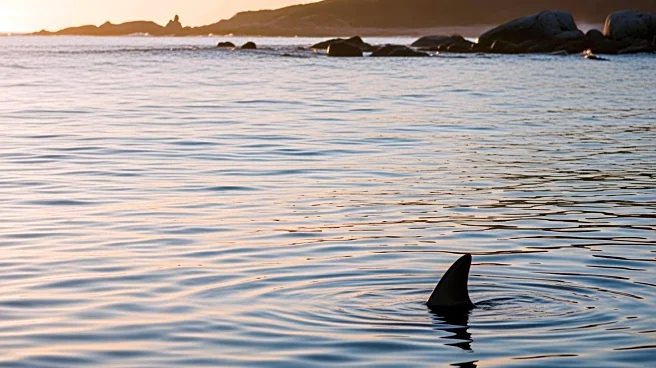
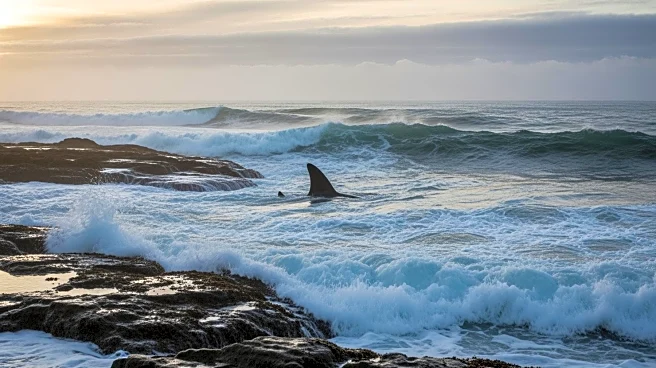
A young white shark was recently spotted off the coast of Newport Beach, prompting marine biologist Chris Lowe to warn Southern California residents of potential increased shark sightings by the end of summer. Lowe, who directs the Shark Lab at California State
University, Long Beach, explained that the region's beaches serve as nurseries for young sharks. The unusually warm ocean temperatures, attributed to a marine heat wave, are causing these sharks to remain in the area. Oceanographers predict a strong El Niño this year, similar to the one in 2015, which could further influence shark behavior. Despite the increased presence of sharks, attacks remain rare as sharks do not perceive humans as prey.
Why It's Important?
The potential increase in shark sightings along Southern California's coast highlights the impact of climate patterns on marine life. The warm waters, a result of the marine heat wave and anticipated El Niño, could lead to more frequent interactions between sharks and beachgoers. This situation underscores the importance of understanding and adapting to environmental changes. Additionally, the presence of white sharks is seen as an indicator of healthier ocean ecosystems, reflecting successful efforts in managing fisheries and reducing pollution in California. However, it also raises concerns about public safety and the need for awareness among residents and tourists.
What's Next?
As the summer progresses, Southern California may experience more shark sightings, necessitating increased vigilance from beach authorities and the public. Marine biologists and oceanographers will likely continue monitoring the situation to provide updates and safety guidelines. Public education campaigns may be implemented to inform beachgoers about shark behavior and safety measures. Additionally, ongoing research into the effects of climate change on marine ecosystems will be crucial in predicting future patterns and preparing for similar events.
Beyond the Headlines
The increased presence of white sharks along the coast could have broader implications for local tourism and beach activities. While the presence of these apex predators indicates a healthier marine environment, it may also deter some visitors, impacting local economies reliant on beach tourism. Furthermore, the situation highlights the interconnectedness of climate phenomena and wildlife behavior, emphasizing the need for comprehensive environmental policies that address both conservation and public safety.