





What's Happening?
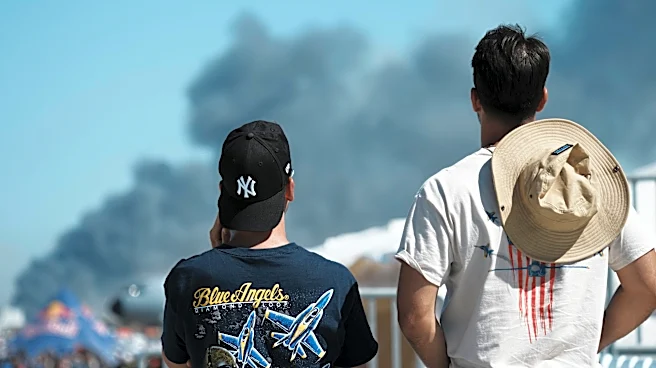
A fiery plane crash near Tampa Executive Airport resulted in the deaths of two individuals, including the pilot, Dr. David Siambanes. Records indicate that Dr. Siambanes was flying without a standard FAA medical certificate. Instead, he was operating
under BasicMed, a congressional alternative to standard FAA medical certification approved in 2017. Bob Katz, a veteran pilot, noted that Siambanes' FAA airman's record showed his medical certificate was not valid after November 30, 2021, suggesting he was rejected for renewal due to a disqualifying medical condition. Disqualifying conditions, according to the FAA, can include mental health, neurological, or cardiovascular issues. The aircraft involved was an experimental, high-performance turboprop, which Katz described as challenging to fly and requiring a pilot in top physical condition. The Federal Aviation Administration (FAA) is currently investigating the crash, with a final report expected in several months.
Why It's Important?
This incident raises significant questions about the safety implications of the BasicMed program and the oversight of pilots flying under alternative medical certifications. While the program was intended to provide an alternative for pilots, the fact that Dr. Siambanes had a disqualifying medical condition that prevented him from obtaining a standard FAA certificate, yet was still permitted to fly, highlights a potential loophole. This situation could undermine public confidence in aviation safety, particularly for passengers and those on the ground. Critics, like Bob Katz, argue that allowing pilots with known medical issues to fly without stringent FAA medical clearance poses a "nuisance to public safety." The crash could prompt a re-evaluation of the BasicMed program's requirements and its effectiveness in ensuring pilot fitness, potentially leading to stricter regulations or enhanced monitoring for pilots utilizing this alternative certification. The incident also underscores the inherent risks associated with experimental aircraft, which often demand a high level of pilot proficiency and health.
What's Next?
The Federal Aviation Administration (FAA) and the National Transportation Safety Board (NTSB) will continue their investigation into the crash. The NTSB's full report, which will detail the specific cause of the accident, is not expected for several months. This report will be crucial in determining whether Dr. Siambanes' medical condition or the BasicMed program played a direct role in the crash. In the interim, there may be increased scrutiny and public debate surrounding the BasicMed program. Aviation safety advocates and policymakers might call for a review of the program's criteria and its impact on overall aviation safety. Depending on the NTSB's findings, there could be legislative or regulatory actions aimed at modifying the BasicMed requirements or enhancing medical oversight for pilots flying under alternative certifications. The aviation community will be closely watching these developments, as any changes could affect a significant number of pilots currently operating under BasicMed.
Beyond the Headlines
The tragic death of Dr. David Siambanes and Dawn Stone extends beyond the immediate aviation safety concerns, touching upon the broader ethical considerations of medical privacy versus public safety. The BasicMed program, while designed to ease the burden on pilots, inadvertently creates a tension between a pilot's right to privacy regarding their health and the public's right to safety in the skies. This incident could reignite discussions about the balance between individual freedoms and collective security, particularly in high-risk activities like aviation. Furthermore, the case highlights the complexities of regulating experimental aircraft, which often operate under different rules than commercially manufactured planes. The emotional impact on the families of the victims and the broader medical community, given Dr. Siambanes' and Ms. Stone's professions, adds another layer of tragedy, prompting reflection on the unforeseen consequences of regulatory frameworks and the critical importance of pilot health in preventing such disasters.