





What's Happening?
The Office of Economic Development (OED) on Kauaʻi has allocated a total of $450,000 through its Agricultural Farm Expansion Grant Program for Fiscal Year 2026-27. Six organizations were selected as recipients following a competitive application process.
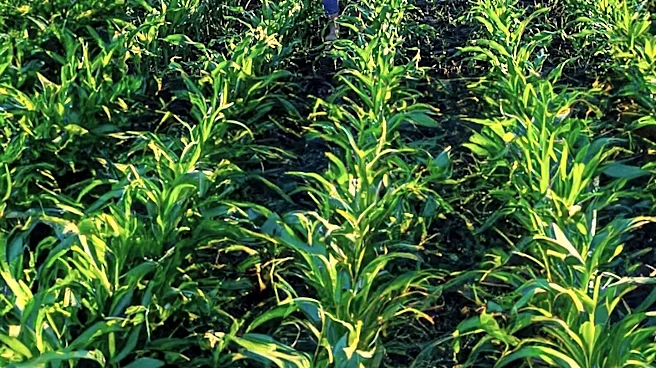
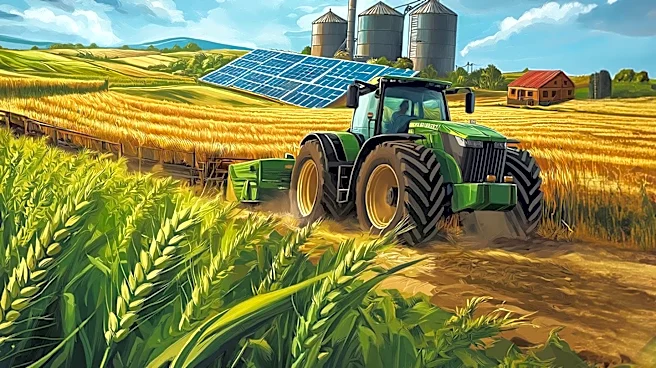
These grants are designed to support projects that enhance Kauaʻi's agricultural industry by expanding local farming and production, improving agricultural infrastructure, and bolstering the island's food security. OED Director Nalani Kaʻauwai Brun emphasized that the selection committee reviewed proposals based on established criteria, including the potential to increase agricultural production capacity, improve operational efficiency, and support long-term sustainability. The funded projects include restoring traditional kalo farming water access, expanding cacao processing, developing renewable energy infrastructure for aquaculture, acquiring agricultural equipment for efficiency, and purchasing a tractor for community farm operations.
Why It's Important?
This grant program is crucial for strengthening Kauaʻi's agricultural sector and enhancing its food security. By investing in local farming initiatives, the OED aims to reduce the island's reliance on imported food, making it more resilient to external disruptions. The projects funded address critical needs, from preserving traditional farming practices like kalo cultivation to modernizing infrastructure with renewable energy and advanced equipment. This support helps local farmers increase their output, improve efficiency, and adopt sustainable practices, which in turn creates local employment opportunities and stimulates the island's economy. The focus on both traditional and modern agricultural methods ensures a diverse and robust food system, benefiting both current residents and future generations.
What's Next?
The six recipient organizations will now proceed with implementing their funded projects. These initiatives are expected to lead to tangible improvements in agricultural production, infrastructure, and sustainability on Kauaʻi. The OED will likely monitor the progress and impact of these projects to ensure they meet the program's objectives. The success of these grants could also inform future funding rounds and agricultural development strategies for the island. Continued investment in such programs will be essential for Kauaʻi to achieve its long-term goals of increased food self-sufficiency and a more resilient local economy. The projects are anticipated to contribute to a stronger agricultural community and improved food access for residents.
Beyond the Headlines
Beyond the immediate economic and food security benefits, these grants underscore a broader commitment to cultural preservation and environmental stewardship on Kauaʻi. Projects like the restoration of the Puʻulima ʻAuwai and loʻi for kalo farming are not just about food production; they are about maintaining traditional Hawaiian agricultural practices and the cultural heritage associated with them. The emphasis on renewable energy infrastructure and sustainable practices also reflects a forward-thinking approach to agriculture that integrates ecological considerations. This holistic strategy recognizes that a healthy food system is intertwined with cultural identity, environmental health, and economic stability. The grants serve as a model for how local governments can strategically invest in agriculture to achieve multiple community benefits.