





What's Happening?
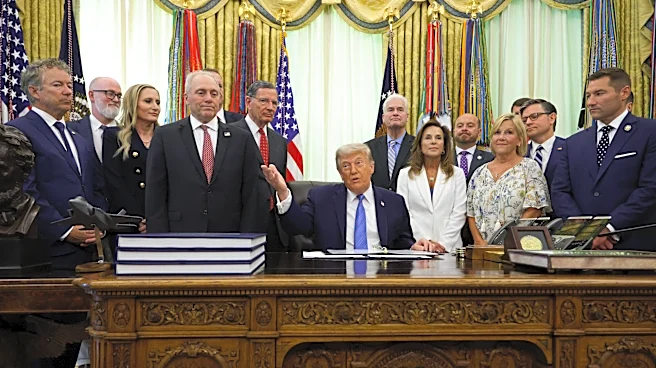
The United States has signed the San Francisco Declaration on the Secure Foundations of Enduring Prosperity, highlighting a growing international convergence of industrial policy, technology, and strategic interests. This declaration underscores the increasing
importance of economic security in international politics, focusing on protecting supply chains, securing access to strategic technologies, and reducing industrial dependencies. Japan, a long-standing proponent of economic security, offers a comprehensive model through its Economic Security Promotion Act (ESPA), adopted in 2022. According to Akira Igata, a professor at the University of Tokyo, Japan's approach is broad, covering critical infrastructure resilience, strategic technology protection, and supply chain diversification. The ESPA allows the government to subsidize up to 50% of private-sector investments aimed at reducing vulnerabilities in strategic goods procurement. This proactive stance by Japan, influenced by the vision of late Prime Minister Shinzo Abe, has been shaped by past tensions with China over raw material access, reinforcing the link between trade and national security.
Why It's Important?
The U.S. declaration and Japan's established economic security framework signal a significant shift in global economic policy, moving away from pure economic efficiency towards a balance with national security and resilience. This transformation has profound implications for U.S. industries, particularly those reliant on global supply chains and critical technologies. The emphasis on domestic manufacturing capabilities, as seen in Japan's investment in advanced semiconductor production through companies like Rapidus, could inspire similar initiatives in the U.S., potentially leading to increased domestic production and reduced reliance on foreign suppliers. However, this also raises questions about the economic sustainability of such expensive domestic production and the potential for protectionist policies. The U.S. is actively seeking international cooperation through frameworks like Pax Silica, which Italy and Japan have joined, to restructure global technology supply chains. This collaborative effort aims to enhance resilience against geopolitical risks and supply disruptions, benefiting U.S. companies by creating more stable and secure access to essential components and materials, while potentially increasing costs due to less efficient domestic or allied production.
What's Next?
The U.S. will likely continue to develop and implement policies aligned with the San Francisco Declaration, potentially expanding its international partnerships to strengthen economic security. The Pax Silica initiative, which the U.S. views as a framework for restructuring global technology supply chains, is expected to evolve, with increased involvement from European countries. This could lead to more coordinated efforts in areas like critical mineral stockpiling, research and development into alternative materials, and diversification of supply chains. The ongoing dialogue between the U.S., Japan, and European nations will focus on balancing economic efficiency with security and resilience. The effectiveness of these initiatives, particularly in delivering tangible results, remains an open question, as highlighted by Professor Igata. Future developments will likely involve continued government subsidies for strategic industries, efforts to attract foreign technology and investment while supporting national champions, and a careful assessment of the costs associated with reducing strategic dependencies.
Beyond the Headlines
The shift towards economic security, as exemplified by the U.S. declaration and Japan's model, introduces a complex 'quadrilemma' involving economic efficiency, security and resilience, environmental protection, and human rights. Pursuing one objective often necessitates compromises on others, leading to ethical and practical dilemmas for policymakers and businesses. The risk of economic security measures morphing into protectionism is a significant concern, as complete technological self-sufficiency is often unattainable. This new paradigm challenges the traditional free-market approach, suggesting a more interventionist role for governments in shaping industrial policy. For the U.S., this could mean re-evaluating trade agreements, investing heavily in domestic R&D, and fostering strategic alliances that prioritize resilience over pure cost-effectiveness. The long-term implications include potential shifts in global trade patterns, increased government involvement in private sector investments, and a redefinition of national security to encompass economic vulnerabilities.