


What's Happening?
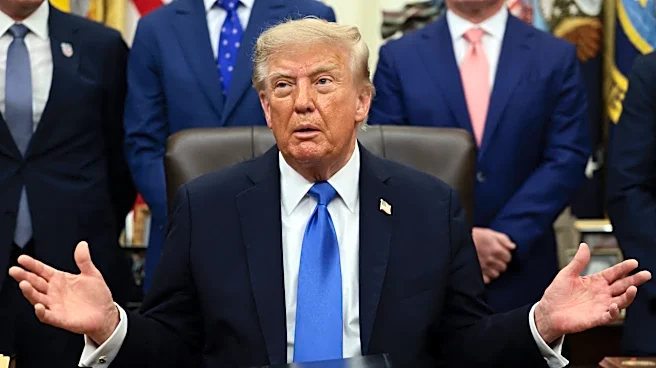
U.S. Rep. Ralph Norman has publicly expressed his surprise and disappointment regarding President Trump's decision to endorse Sen. Darline Graham in the South Carolina Republican primary. Norman, who lost to Graham in the GOP primary, questioned the President's
involvement, describing it as 'shocking.' He criticized Graham as a candidate aligned with the 'Washington establishment,' drawing a parallel to Senator Lisa Murkowski, who he claims frequently opposes President Trump. Despite his continued support for President Trump's overall leadership and his actions for the country, Norman stated he does not understand why the President chose to get involved in this specific race or provide financial support to Graham's campaign. Norman believes President Trump's attention could have been better directed towards other races across the nation.
Why It's Important?
This situation highlights ongoing internal divisions within the Republican Party, particularly concerning the influence of party leadership and President Trump's role in primary contests. Norman's comments underscore a tension between loyalty to President Trump and local political dynamics. His questioning of the endorsement, despite his general support for the President, indicates that even staunch allies may disagree with specific political interventions. This could signal a potential shift in how President Trump's endorsements are perceived or received in future primary elections, especially in races where local candidates feel overlooked or where the endorsement goes against the expectations of some of his supporters. The outcome of such endorsements can significantly impact the composition of the Republican Party in Congress and influence future legislative agendas.
What's Next?
The immediate consequence is the continued discussion and potential widening of the rift within South Carolina Republican politics. Norman's public questioning of President Trump's endorsement could encourage other candidates or factions to voice similar concerns in future primary contests, potentially leading to more contested primaries where President Trump's influence is challenged. For President Trump, this incident might prompt a reevaluation of his endorsement strategy, particularly in races where local sentiment is strong or where his chosen candidate faces significant opposition from within his own base. The long-term impact could be a more nuanced approach to endorsements, or conversely, a reinforcement of his strategy, depending on the perceived success or failure of his chosen candidates in subsequent elections. The South Carolina Senate race will continue to be watched for how these internal party dynamics play out.
Beyond the Headlines
This event touches upon the broader theme of political patronage and the power dynamics within a political party. President Trump's endorsement, often seen as a powerful tool, is being openly questioned by a loyal supporter, which could set a precedent for future challenges to his influence. It also raises questions about the 'Washington machine' versus grassroots movements within the Republican Party, as Norman frames Graham as an establishment candidate. The ethical dimension involves the balance between a party leader's right to endorse and the potential for such endorsements to override local political processes or voter preferences. This could lead to a re-examination of how much sway a former president should hold over state-level primary elections and whether such interventions truly benefit the party in the long run, especially if they alienate segments of the base.