






What's Happening?
Gary Siders Sr., a 73-year-old grandfather from rural southern Ohio, has been found mentally incompetent to stand trial. This ruling comes after 16 of his grandchildren were discovered living in squalid conditions at his home. A judge in Vinton County
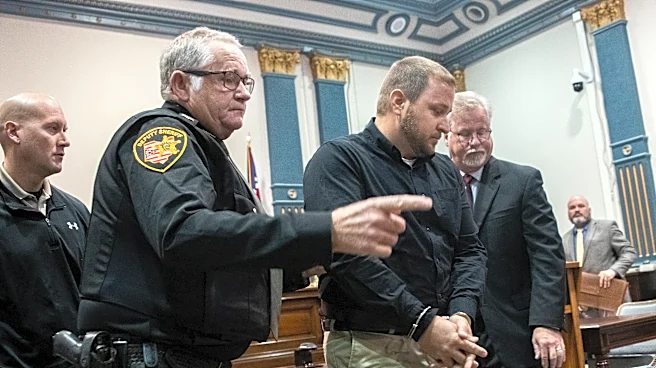
accepted the findings of an evaluation report, and Vinton County Prosecutor William Archer did not object. Siders Sr. appeared in court in a wheelchair, and his attorney, Dorian Baum, stated that Siders' mental health has been declining for years and is 'not restorable.' Siders Sr. was charged with 16 counts of child endangerment following the rescue of the children on June 30 from a home in Hamden, approximately 80 miles south of Columbus. Investigators reported that the children, ranging in age from 18 months to 18 years, were mostly confined to a small room under deplorable conditions, with some described as 'feral' and unable to speak.
Why It's Important?
This case highlights severe issues of child neglect and the complexities of the justice system when dealing with defendants facing mental health challenges. The finding of mental incompetence means that Siders Sr. is currently unable to understand the charges against him or assist in his own defense, which halts the legal proceedings against him. This situation underscores the critical need for mental health evaluations in criminal cases, particularly when a defendant's capacity is in question. For the 16 grandchildren, the discovery of their living conditions and their subsequent rescue bring to light the hidden struggles of vulnerable children and the importance of community vigilance and intervention. The long-term impact on these children, some of whom were described as 'feral' and unable to speak, will require extensive support and care.
What's Next?
Given the finding that Gary Siders Sr.'s mental health is 'not restorable,' it is unlikely he will face trial for the child endangerment charges in the foreseeable future. The focus will likely shift to his care and the ongoing legal proceedings against his wife, Christina Siders, his son Gary Siders Jr., and his daughter-in-law Elizabeth Siders, all of whom have pleaded not guilty to related charges. The welfare of the 16 grandchildren will remain a primary concern, with authorities and social services continuing to provide care and support. The case may also prompt further investigation into how such severe neglect could go unnoticed for so long, potentially leading to reviews of child welfare protocols in the region.
Beyond the Headlines
The tragic circumstances of this case extend beyond the immediate legal outcomes, raising profound societal questions about child protection, family dynamics, and mental health. The fact that 16 children were living in such dire conditions, with some unable to speak, points to a severe breakdown in social support systems and community oversight. It also highlights the challenges of identifying and intervening in cases of extreme neglect, particularly in isolated or rural areas. The attorney's assertion that Siders Sr.'s mental health has been declining for years suggests a potential link between untreated mental illness and the conditions in which the children were found. This case serves as a stark reminder of the ethical and moral responsibilities of communities to protect their most vulnerable members and the complex interplay of factors that can lead to such devastating situations.