


What's Happening?
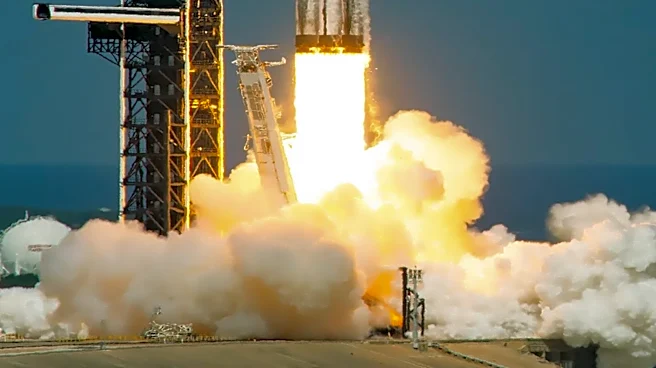
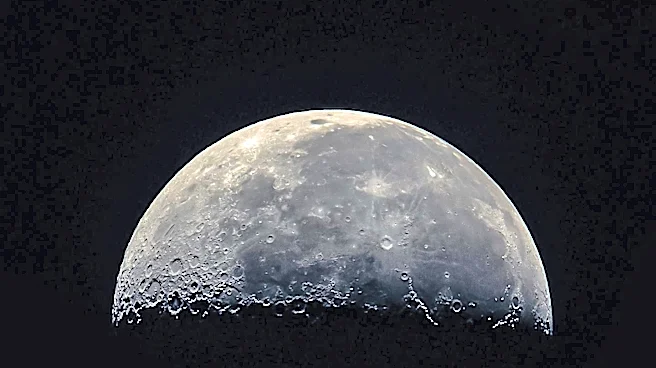
A piece of a SpaceX Falcon 9 rocket is believed to have unintentionally crashed into the moon, creating a new crater. The collision, which occurred at high speed, was expected to produce a visible flash and a cloud of dust and debris. However, initial
observations have not confirmed these effects. The impact site will be monitored by telescopes and spacecraft, including NASA's Lunar Reconnaissance Orbiter, to gather data on the collision. This event highlights the challenges of tracking space debris and its potential impacts on celestial bodies.
Why It's Important?
The incident underscores the growing issue of space debris and its management. As more rockets and satellites are launched, the risk of unintended collisions increases, posing challenges for space exploration and safety. Understanding the effects of such impacts can inform future missions and debris mitigation strategies. The data collected from this event could provide insights into the moon's surface composition and the dynamics of artificial impacts, contributing to scientific knowledge and exploration planning.
What's Next?
Further analysis of the impact site will be conducted to confirm the collision and assess its effects. This includes comparing new images with previous ones to identify changes. The findings could influence policies on space debris management and inform future missions to the moon and other celestial bodies. As space exploration continues to expand, addressing the challenges of space debris will be crucial to ensuring the safety and success of future endeavors.