






What's Happening?
The World Health Organization (WHO) has reported that more than 100 people have died from Ebola in eastern Congo, following an outbreak declared on May 15. The outbreak, caused by the Bundibugyo virus, has resulted in 550 confirmed cases, with 101 deaths
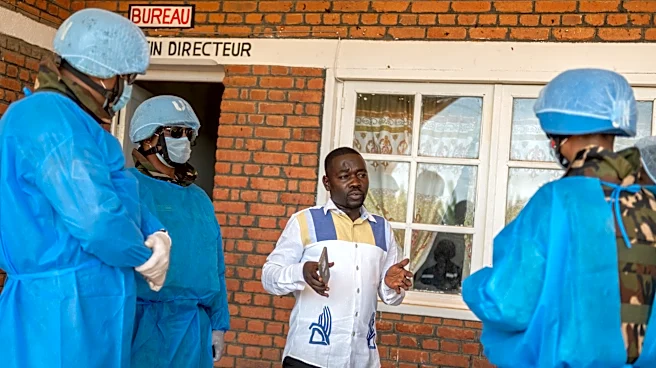
and 19 recoveries. The situation is exacerbated by ongoing armed conflict in the region, which disrupts surveillance and response activities. The outbreak is concentrated in the Ituri province, with cases also reported in North Kivu and South Kivu provinces, and has spread to Uganda. Efforts to contain the virus are hindered by attacks on health workers, skepticism among locals, and logistical challenges in reaching remote areas. The WHO assesses the risk of further spread in Africa and globally as low, but emphasizes the need for medical support for patients.
Why It's Important?
The Ebola outbreak in Congo poses significant public health challenges, particularly due to the lack of an approved vaccine or treatment for the Bundibugyo virus. The conflict in the region complicates efforts to trace and contain the virus, increasing the risk of undetected transmission. This situation highlights the vulnerability of regions with ongoing conflict to infectious disease outbreaks, which can have severe humanitarian and economic impacts. The outbreak also underscores the importance of international cooperation and support in addressing public health emergencies, as well as the need for robust health systems capable of responding to such crises.
What's Next?
The WHO and local health authorities are intensifying efforts to contain the outbreak, focusing on improving contact tracing and providing medical support to affected individuals. The situation requires close collaboration with local leaders and communities to overcome skepticism and resistance to health measures. Additionally, the international community may need to provide further support to strengthen health infrastructure and ensure the safety of health workers. Monitoring the situation closely will be crucial to prevent further spread and mitigate the impact of the outbreak.