

What's Happening?
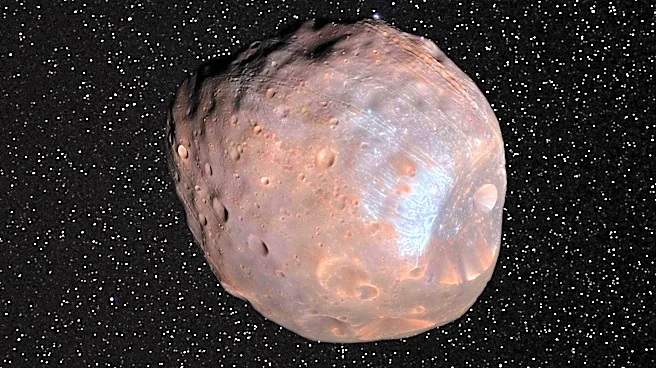
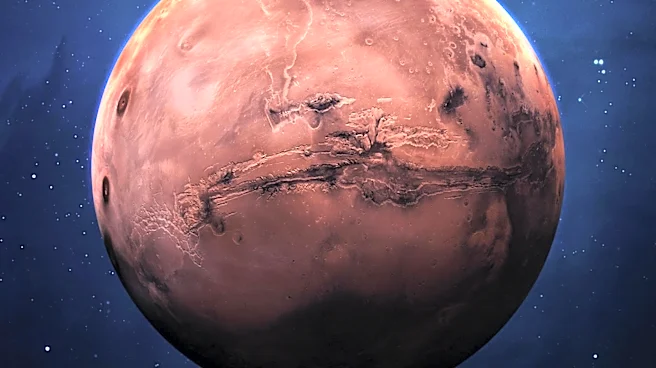
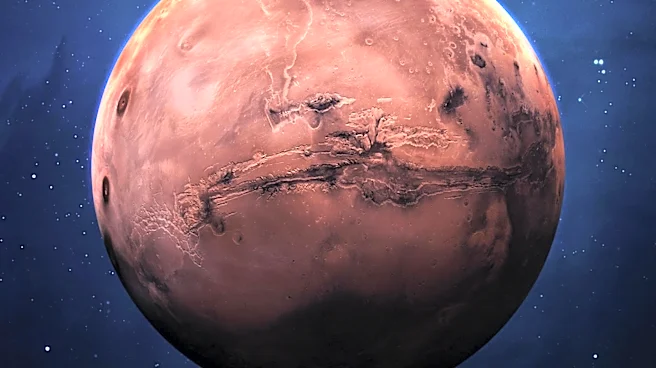
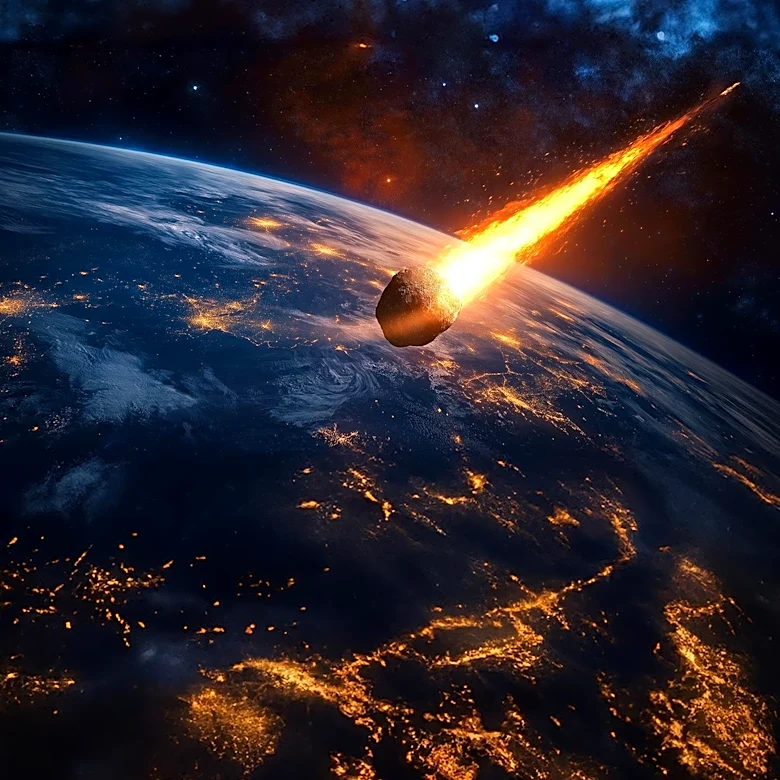
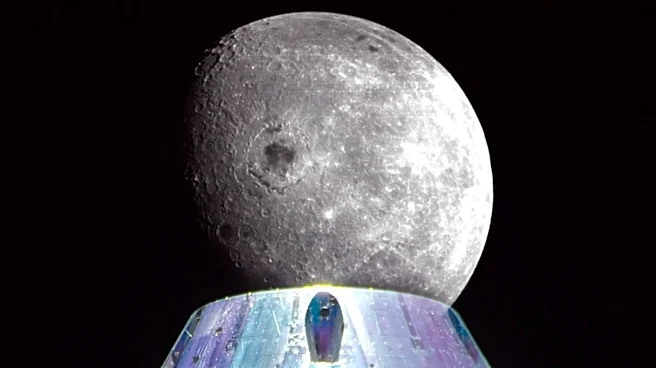
Phobos, the larger of Mars' two moons, is gradually moving closer to the planet at a rate of approximately 1.8 centimeters per year. This inward drift is a result of gravitational interactions between Mars and Phobos, which are causing the moon to lose orbital
energy. According to NASA, Phobos could either collide with Mars or disintegrate into a ring in about 50 million years, while the European Space Agency (ESA) suggests this could occur within 100 million years. The moon's fate depends on its internal structure, with weaker materials potentially breaking apart to form a ring around Mars. Phobos currently orbits Mars three times a day, and its descent is expected to accelerate as it gets closer to the planet.
Why It's Important?
The potential disintegration of Phobos into a ring around Mars offers a unique opportunity for scientists to study the processes that lead to the formation of planetary rings. Understanding these dynamics can provide insights into similar phenomena observed in other parts of the solar system, such as Saturn's rings. Additionally, the study of Phobos' gradual descent and potential breakup could enhance our knowledge of tidal interactions and their long-term effects on celestial bodies. This research is crucial for planetary science and could inform future missions to Mars and its moons.
What's Next?
While the timeline for Phobos' potential breakup spans millions of years, ongoing observations and research will continue to refine predictions about its future. Scientists will likely focus on understanding the moon's internal structure and the forces at play in its orbital decay. Future missions to Mars and its moons may provide more detailed data, helping to confirm or adjust current models. The study of Phobos' fate will remain a significant area of interest for planetary scientists, offering a window into the dynamic processes shaping our solar system.
Beyond the Headlines
The eventual formation of a ring around Mars, albeit temporary, could have implications for the planet's atmosphere and surface conditions. The debris from Phobos could interact with Mars' atmosphere, potentially affecting its climate and surface features over time. Additionally, the study of Phobos' descent could inform our understanding of similar processes on other planets, contributing to broader theories about planetary evolution and the lifecycle of moons.