







What's Happening?
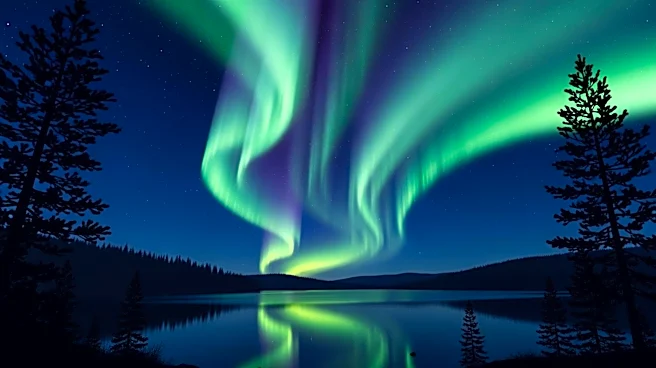
The northern lights, or aurora borealis, are expected to be visible again due to lingering solar activity. According to the NOAA Space Weather Prediction Center, geomagnetic conditions are fluctuating between quiet and active levels, allowing for isolated
aurora displays. The best viewing times are late in the evening of May 6 into the early morning of May 7, particularly in higher-latitude regions such as Canada, Alaska, and parts of the northern United States. Dark skies away from city lights are recommended for optimal viewing.
Why It's Important?
The visibility of the northern lights presents a unique opportunity for residents in northern regions to witness this natural phenomenon. It highlights the ongoing impact of solar activity on Earth's magnetic field, which can have broader implications for satellite communications and power grids. The event also underscores the importance of space weather forecasting in predicting and mitigating potential disruptions caused by geomagnetic storms.
What's Next?
As solar activity continues to influence geomagnetic conditions, further aurora displays may occur, depending on the intensity of solar emissions. Observers are encouraged to monitor real-time aurora forecasts and space-weather updates to maximize their chances of witnessing the northern lights. Continued research and monitoring by organizations like NOAA will be crucial in understanding and predicting future solar events.