




What's Happening?
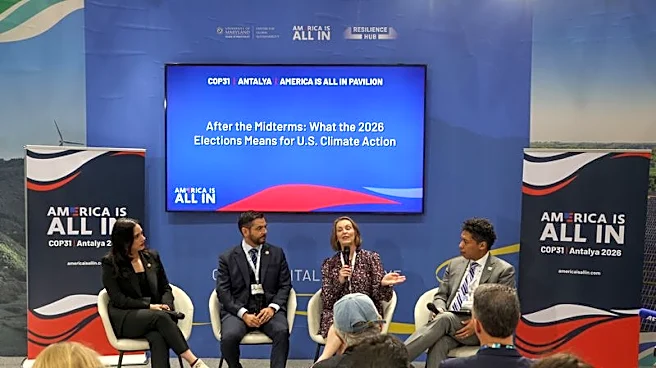
The Philippines has officially joined an 18-country coalition aimed at expanding high-integrity carbon credit markets. This development occurred during the COP31 climate talks in Antalya, Turkey, where governments are pushing for policies to attract increased
private financing for climate action. The Department of Environment and Natural Resources (DENR) announced the country's inclusion in The Coalition to Grow Carbon Markets, alongside new members Colombia, Egypt, and Ireland. Environment Secretary Juan Miguel T. Cuna stated that the Philippines will endorse the Antalya Statement as part of its strategy to mobilize climate finance and establish a national carbon market framework. This move aligns with Executive Order (EO) 127, issued on October 13, 2026, which directs the DENR to create a national carbon market policy framework for voluntary markets. The coalition, supported by the Türkiye COP31 Presidency, convened ministers on November 16 to discuss policies that could stimulate demand for carbon credits and encourage private investment. The meeting followed the release of the Antalya Statement, backed by 17 countries, and a Policy Playbook outlining governmental measures for developing carbon credit markets.
Why It's Important?
The Philippines' participation in this global coalition is significant for several reasons. It underscores the nation's commitment to addressing climate change by actively seeking innovative financing mechanisms. By endorsing the Antalya Statement and developing a national carbon market framework, the Philippines aims to attract private investment, which is crucial for accelerating climate action and achieving sustainable development goals. Secretary Cuna emphasized that government leadership is essential to provide the policy certainty, transparency, and integrity needed to build corporate buyers' confidence in credible climate solutions. This initiative is part of a broader global effort to mobilize private financing to bridge a substantial $1.3-trillion climate finance gap. High-integrity carbon markets can channel additional private funds toward climate programs, thereby complementing public financing and supporting countries' climate and development objectives. The Policy Playbook, welcomed by advance market commitment groups like Action for a Resilient Climate Coalition, Emergent, and Kinetic Coalition, provides a roadmap for governments to implement policy measures that foster these markets.
What's Next?
Following its commitment, the Philippines is expected to actively work on implementing Executive Order 127, which mandates the DENR to establish a national carbon market policy framework for voluntary markets. This framework will be crucial for mobilizing climate finance, attracting green investments, and accelerating progress toward the country's greenhouse gas reduction targets. The nation will also likely engage with other coalition members to share best practices and collaborate on policies that stimulate demand for carbon credits. The UN Framework Convention on Climate Change Executive Secretary Simon Stiell highlighted that high-integrity carbon markets are vital in the race against time to limit global warming to the 1.5-degree Celsius threshold. Therefore, the Philippines' next steps will involve translating its commitment into concrete policies and market mechanisms that can effectively channel private capital into climate solutions, contributing to both national and global climate goals.
Beyond the Headlines
The Philippines' engagement in the global carbon trade coalition signifies a broader shift in how developing nations are approaching climate finance. It highlights a recognition that public funds alone are insufficient to tackle the immense challenges posed by climate change, necessitating robust private sector involvement. This move could set a precedent for other nations in the region, encouraging them to explore similar market-based mechanisms for climate action. Ethically, the emphasis on 'high-integrity' carbon markets is crucial, as it aims to prevent greenwashing and ensure that carbon credits genuinely represent verifiable emissions reductions. Legally, the development of a national carbon market framework will require careful legislative and regulatory work to ensure transparency, accountability, and fairness. Culturally, this initiative could foster greater awareness and participation from corporations and individuals in climate solutions, integrating environmental responsibility into economic activities and long-term development strategies.