



What's Happening?
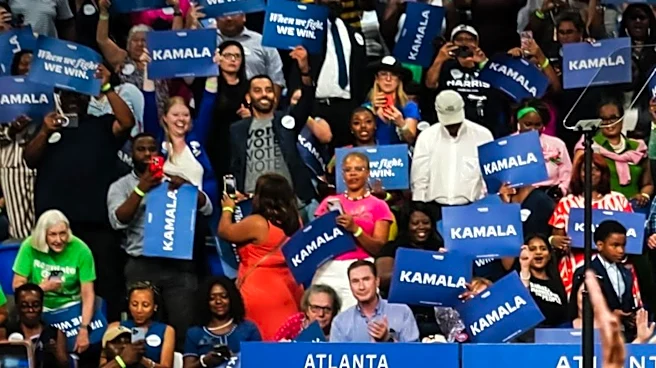
A recent McLaughlin poll indicates shifts in the potential 2028 Democratic primary landscape, with Representative Alexandria Ocasio-Cortez gaining traction among possible candidates. Former Vice President Kamala Harris, who previously held a significant
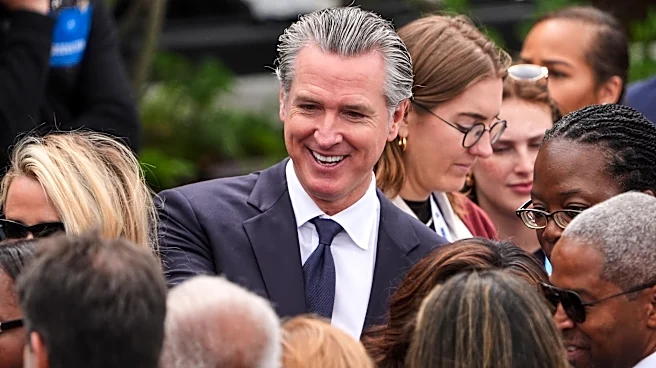
lead, now sees her support narrowing as California Governor Gavin Newsom and Ocasio-Cortez increase their backing. The poll, conducted among 1,000 general election voters, shows Harris leading with 26% support, followed by Newsom at 16% and Ocasio-Cortez at 9%. This development comes as potential candidates begin to test their messages and build name recognition in key primary states. The poll results are significant as they influence candidates' fundraising capabilities and media attention, which are crucial for campaign viability.
Why It's Important?
The shifts in polling numbers are crucial for the Democratic Party as they prepare for the 2028 presidential election. The increased support for Ocasio-Cortez and Newsom suggests a potential shift in voter preferences towards more progressive candidates. This could impact the party's strategy and platform, as candidates with higher poll numbers are more likely to attract donors and media coverage. The narrowing lead of Harris indicates a competitive primary race, which could lead to a more dynamic and diverse field of candidates. The poll results also reflect the evolving political landscape within the Democratic Party, highlighting the importance of addressing key issues such as healthcare and workers' rights, which Ocasio-Cortez has emphasized.
What's Next?
As the 2028 election approaches, potential candidates are expected to announce their campaigns, likely starting in early 2027. The Democratic primary race will be closely watched, with future polls providing insights into voter preferences and candidate viability. The Department of Justice investigation into Newsom could also influence his standing among voters. Candidates will continue to engage with key primary states to solidify their support base. The evolving dynamics of the race will require candidates to adapt their strategies to appeal to a broad spectrum of Democratic voters, potentially leading to shifts in policy focus and campaign messaging.