







What's Happening?
Scientists have discovered the largest-known dinosaur in Southeast Asia, named Nagatitan chaiyaphumensis, in Thailand. This sauropod, which lived approximately 113 million years ago, measured nearly 90 feet in length and weighed between 25 to 28 tons.
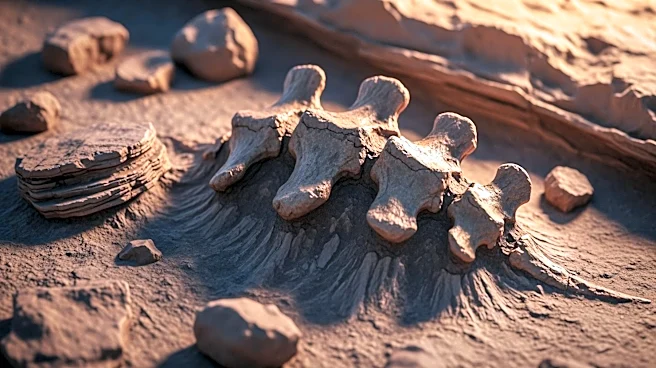
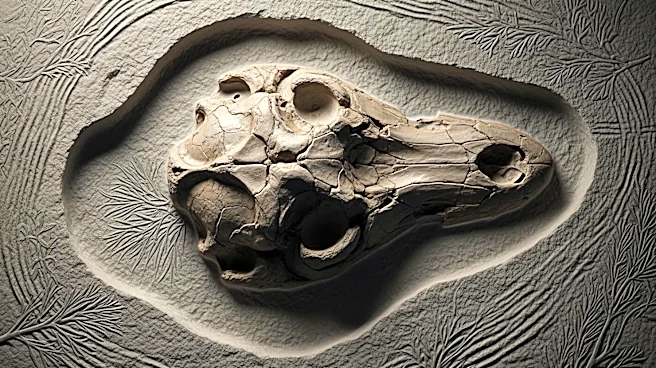
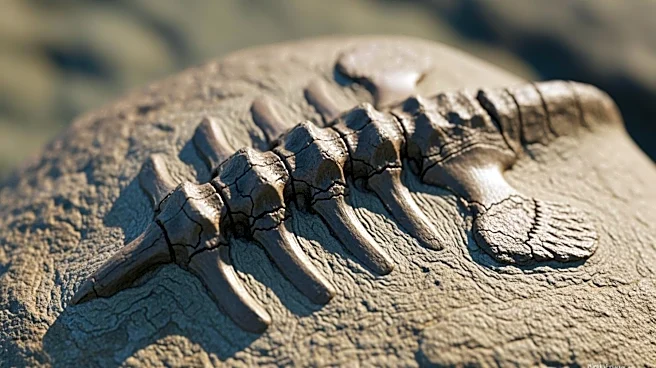
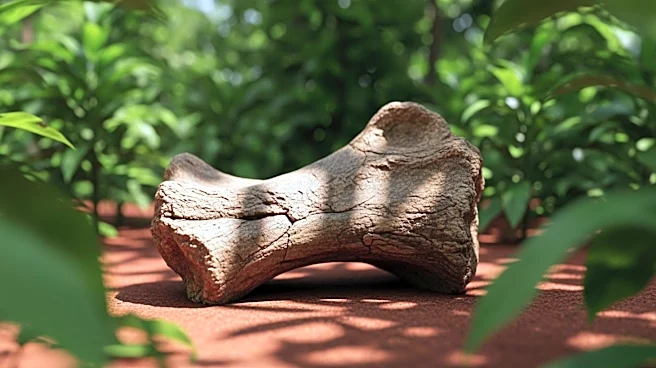
The fossils were found in the northeastern province of Chaiyaphum and include parts of the spine, rib, pelvis, and leg bones. Nagatitan belonged to a subgroup of sauropods with lightweight skeletons due to internal air sacs. The discovery provides insights into the diversity and evolution of sauropods in the region, which were among the largest land animals in Earth's history.
Why It's Important?
The discovery of Nagatitan chaiyaphumensis is significant for understanding the evolutionary trends of sauropods during the Cretaceous period. It highlights the adaptation of these dinosaurs to their environment, particularly in response to climatic changes and predation pressures. The findings contribute to the broader knowledge of dinosaur distribution and diversity in Southeast Asia, a region with relatively few known sauropod fossils. This research enhances our understanding of how large herbivorous dinosaurs thrived and adapted to their ecosystems, providing a glimpse into the prehistoric world.