



What's Happening?
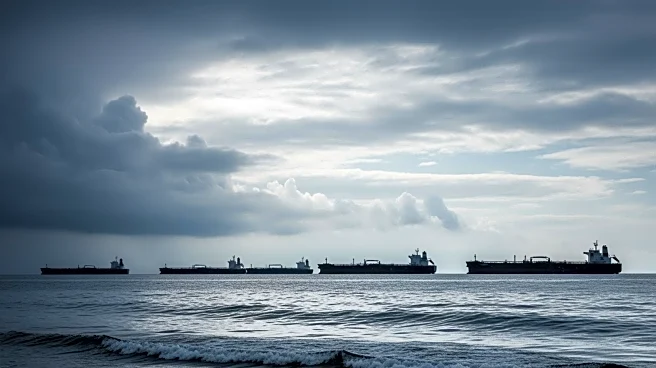
Oil tankers navigating the Turkish Straits are experiencing significant delays, with wait times reaching up to 12 days for a round trip to the Black Sea. This congestion is attributed to winter storms, heightened security risks, and shorter daylight hours.
Recent attacks on tankers carrying Russian oil and strikes on port infrastructure in Novorossiysk have intensified security checks, further complicating the situation. The Bosphorus and Dardanelles straits are crucial export routes for crude oil from Russia, Kazakhstan, and Azerbaijan, making these delays impactful on global oil supply chains.
Why It's Important?
The delays in the Turkish Straits have significant implications for global oil markets, as they affect the timely delivery of crude oil from key exporting countries. Prolonged wait times can disrupt supply chains, potentially leading to fluctuations in oil prices. The increased security risks highlight the vulnerability of critical maritime routes to geopolitical tensions and conflicts. As a result, oil companies and refiners may need to seek alternative supply sources or routes to mitigate the impact of these disruptions.
What's Next?
Stakeholders in the oil industry will likely monitor the situation closely and explore contingency plans to address the ongoing delays. This may include seeking alternative routes or increasing security measures to protect shipments. The Turkish government and international maritime authorities may also engage in discussions to enhance the safety and efficiency of passage through the straits. As geopolitical tensions persist, the industry will need to remain vigilant and adaptable to ensure the stability of global oil supply chains.