





What's Happening?
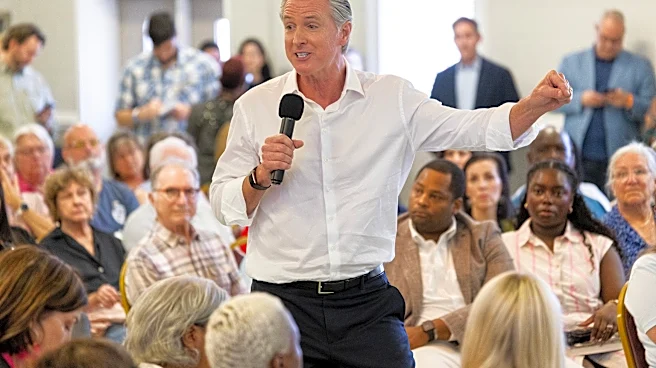
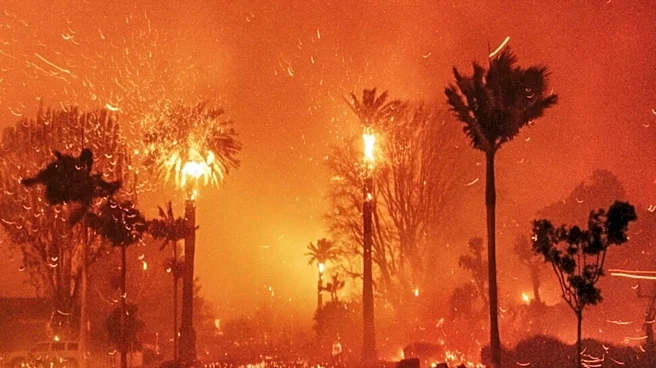
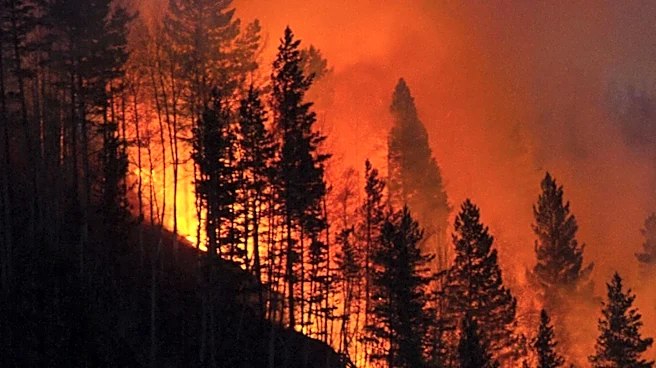
A significant wildfire bill in California, negotiated by Governor Gavin Newsom and top legislative leaders, failed to pass after the Assembly Democratic Caucus refused to bring it to a vote. This legislation aimed to address the financial burden of catastrophic
wildfires, particularly concerning who bears the costs when utility equipment ignites fires. The bill sought to balance the financial stability of utilities like Southern California Edison, Pacific Gas & Electric, and San Diego Gas & Electric with the interests of ratepayers and insurers. The proposed compromise included provisions for faster compensation for wildfire victims and enhanced fire prevention efforts, but it did not sufficiently reduce the financial risks for utilities, leading to their opposition and ultimately the bill's collapse on the last day of the legislative session. This outcome highlights a rare instance of legislative rebellion against a deal struck by the state's highest political figures.
Why It's Important?
The failure of California's wildfire legislation carries significant implications for the state's economy, its utility companies, and the insurance industry. Without a clear framework for allocating wildfire costs, utilities face ongoing financial instability, potentially leading to bankruptcies if future powerline-caused wildfires occur. This uncertainty could jeopardize the reliability of the state's electricity supply. For the insurance industry, the lack of legislative action means continued exposure to high-risk areas, potentially leading to insurers withdrawing from California or making property insurance unaffordable for many residents. This situation could exacerbate the housing crisis and impact property values across the state. The political fallout also raises questions about Governor Newsom's influence as a 'lame duck' and the leadership capabilities of Assembly Speaker Robert Rivas, despite the state's one-party rule.
What's Next?
With the legislative session concluded, the immediate future for addressing California's wildfire financial challenges remains uncertain. The issue is likely to resurface in future legislative sessions, potentially with renewed negotiations and different approaches. Governor Newsom still holds significant power, with hundreds of bills awaiting his signature or veto by September 30, which could be used to influence future legislative cooperation. Stakeholders, including utilities, insurance companies, and consumer advocates, will likely continue to lobby for their interests. The state may explore incremental changes to address parts of the problem, such as improving compensation processes for fire victims and enhancing preventative measures, rather than attempting a comprehensive overhaul in one go. The long-term stability of California's energy and insurance markets will depend on finding a viable solution to the financial liabilities associated with wildfires.
Beyond the Headlines
The collapse of the wildfire bill exposes deeper tensions within California's political landscape and the challenges of governing a state grappling with complex environmental and economic issues. The episode highlights the power dynamics between the governor, legislative leaders, and various special interest groups, including utilities, insurers, and consumer advocates. It also underscores the difficulty of achieving consensus on issues with significant financial implications for powerful industries and the public. The 'jamming' tactic, where the governor introduces major proposals late in the legislative session, proved ineffective in this instance, suggesting a potential shift in legislative dynamics. The ongoing struggle to address wildfire costs also reflects broader ethical and societal questions about who should bear the financial burden of natural disasters exacerbated by climate change and aging infrastructure, and how to ensure equitable outcomes for all Californians.