







What's Happening?
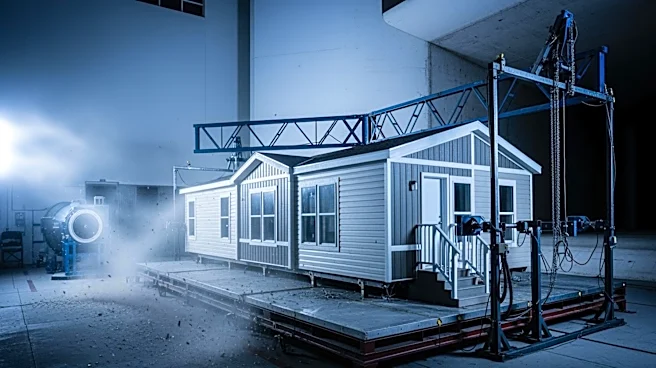
Researchers from Florida International University, the University of Kansas, and the University of Alabama conducted a test to evaluate the resilience of manufactured homes against hurricane- and tornado-force winds. Using a facility known as the 'Wall
of Wind,' capable of generating winds up to 150 miles per hour, they tested a single-section prefab home. The aim was to determine if current construction standards for manufactured homes are sufficient to withstand increasingly severe weather conditions. The test revealed that while improvements have been made since federal standards were first adopted in 1976, manufactured homes remain vulnerable due to their lighter construction and reliance on gravity support systems. The study is significant as manufactured homes are a crucial component of affordable housing in the U.S., with 22 million Americans living in them, many in storm-prone areas.
Why It's Important?
The findings from this research are critical for the future of affordable housing in the U.S., particularly as climate change leads to more frequent and severe storms. Manufactured homes are a key part of the housing market, especially for low-income families, and ensuring their safety is paramount. The study highlights the need for potentially revising building standards to enhance the resilience of these homes against extreme weather. This could lead to policy changes that improve safety and reduce the risk of damage, thereby protecting the financial and physical well-being of millions of Americans. The research also underscores the broader implications of climate change on housing infrastructure and the necessity for adaptive measures.
What's Next?
Researchers plan to expand their tests to include other extreme weather conditions such as flooding and storm surges. This comprehensive approach aims to simulate more realistic scenarios that manufactured homes might face during severe weather events. The results could inform new guidelines and standards for building and anchoring manufactured homes, ensuring they are better equipped to handle the multifaceted challenges posed by extreme weather. These developments could influence regulatory changes and construction practices, ultimately leading to safer housing options for those living in manufactured homes.