







What's Happening?
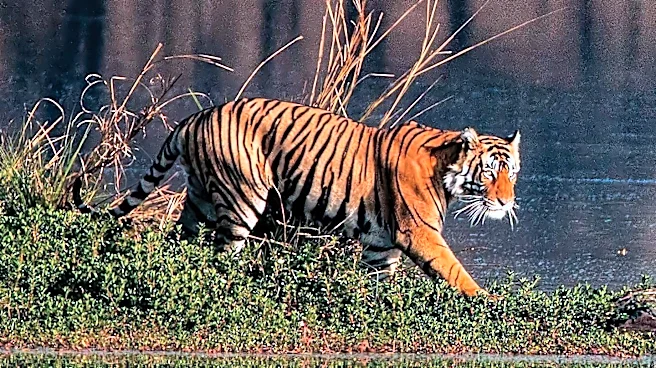
In Telangana, India, experts emphasize the importance of eco-tourism in tiger conservation efforts, particularly in the Amrabad Tiger Reserve. The reserve has seen a significant increase in its tiger population, attributed to the involvement of the indigenous
Chenchu community in conservation activities. In contrast, the Kawal Tiger Reserve in northern Telangana faces challenges such as poaching and habitat fragmentation. Experts argue that promoting eco-tourism can transform wildlife into a source of local pride and economic opportunity, thereby garnering public support for conservation.
Why It's Important?
The promotion of eco-tourism in tiger reserves is crucial for sustainable conservation efforts. By involving local communities in eco-tourism, there is potential to create economic incentives that discourage poaching and habitat destruction. This approach not only aids in the preservation of endangered species but also supports the livelihoods of indigenous communities. The success in Amrabad serves as a model for other regions, highlighting the role of community engagement in conservation strategies.