


What's Happening?
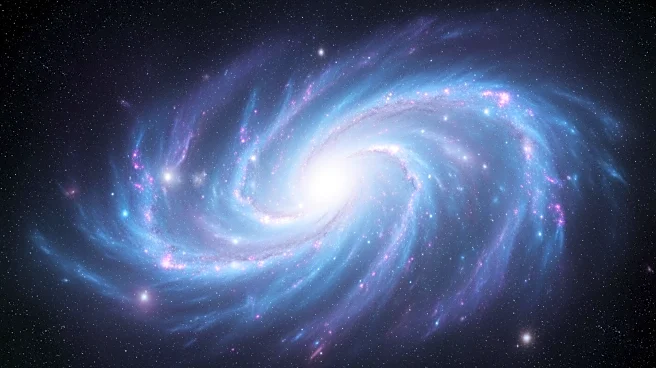
The NASA/ESA Hubble Space Telescope has captured a striking image of the galaxy NGC 4388, part of the Virgo galaxy cluster, located approximately 60 million light-years away. This image reveals a plume of gas emanating from the galaxy's nucleus, a feature
not visible in previous images. The plume is believed to result from the galaxy's movement through the intracluster medium, a hot gas that fills the space between galaxies in the cluster. As NGC 4388 travels through this medium, pressure strips gas from its disk, creating a glowing trail. The ionization of this gas, which causes it to glow, is thought to be influenced by the supermassive black hole at the galaxy's center, as well as shock waves that ionize gas further out.
Why It's Important?
This discovery provides valuable insights into the interactions between galaxies and their environments within clusters. Understanding these interactions is crucial for astronomers studying galaxy evolution and the dynamics of galaxy clusters. The findings also highlight the role of supermassive black holes in influencing their host galaxies, offering a glimpse into the complex processes that govern galaxy behavior. Such research can enhance our knowledge of the universe's structure and the forces shaping it, potentially impacting future astronomical studies and theories.