




What's Happening?
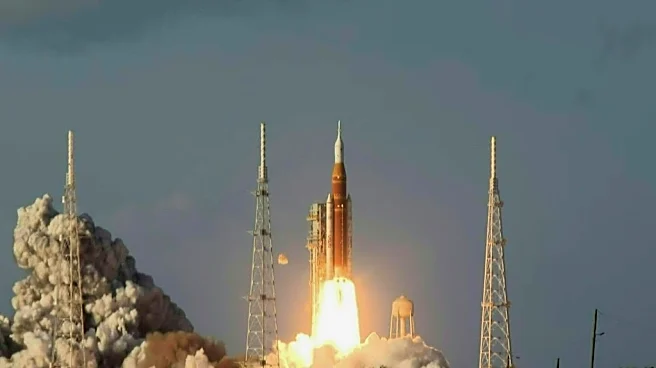
NASA's Artemis II mission is progressing as planned, with the spacecraft currently in Earth orbit conducting critical tests before its journey to the moon. The mission, which launched on April 1, involves four astronauts who are testing life support systems
and practicing manual handling and docking capabilities of the Orion spacecraft. The crew has successfully separated from the Interim Cryogenic Propulsion Stage (ICPS) and conducted a series of controlled maneuvers. The mission aims to validate the spacecraft's systems and prepare for the upcoming Trans Lunar Injection (TLI) burn, which will propel the crew on a 230,000-mile journey to the moon.
Why It's Important?
The Artemis II mission is a crucial step in NASA's long-term goal of returning humans to the moon and establishing a sustainable presence there. The successful completion of Earth orbit operations and the upcoming TLI burn are vital for demonstrating the capabilities of the Orion spacecraft and the Space Launch System. This mission not only represents a significant technological achievement but also serves as a precursor to future lunar landings and potential Mars missions. The advancements made during Artemis II will contribute to the development of new space exploration technologies and inspire future generations of scientists and engineers.
What's Next?
Following the successful Earth orbit operations, the Artemis II crew is preparing for the TLI burn, scheduled for April 2. This burn will officially move the spacecraft out of Earth's orbit and set it on a trajectory to the moon. The mission will follow a free-return trajectory, allowing the spacecraft to loop around the moon and return to Earth without additional engine burns. The crew is expected to reach the moon's vicinity by April 6, passing within 4,000 to 6,000 miles of the lunar surface. The mission will last approximately 10 days, providing valuable data for future lunar exploration efforts.