






What's Happening?
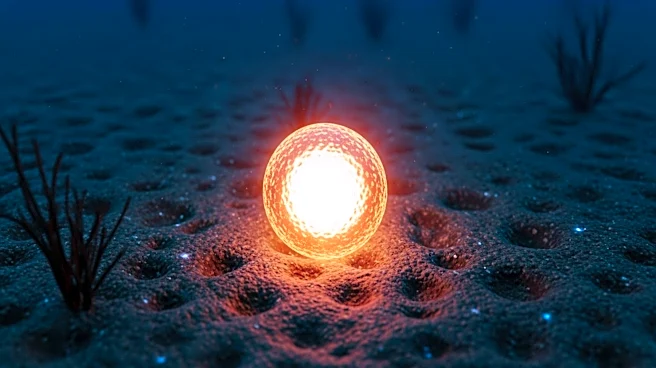
The National Oceanic and Atmospheric Administration (NOAA) has identified a mysterious 'golden orb' discovered during a deep-sea expedition in the Gulf of Alaska. Initially found in 2023, the orb puzzled scientists who speculated it could be an egg case
or a sponge. After detailed analysis, it was determined to be the remnant base of a giant deep-sea anemone, Relicanthus daphneae. This discovery highlights the challenges of deep-ocean exploration and the vast number of marine organisms that remain poorly understood.
Why It's Important?
The identification of the 'golden orb' underscores the importance of deep-sea exploration in expanding our understanding of marine biodiversity. Discoveries like this can provide insights into the complex ecosystems of the ocean's depths and the unique adaptations of deep-sea organisms. The findings also emphasize the need for continued investment in oceanographic research to uncover the mysteries of the deep sea, which could have implications for biodiversity conservation and the study of climate change impacts on marine environments.
What's Next?
Following this discovery, NOAA and other research institutions may increase efforts to explore and document deep-sea ecosystems. Future expeditions could focus on identifying other unknown species and understanding their ecological roles. The findings may also prompt discussions about the conservation of deep-sea habitats, which are increasingly threatened by human activities such as deep-sea mining and climate change.
Beyond the Headlines
The discovery of the 'golden orb' highlights the potential for scientific breakthroughs in unexplored regions of the ocean. It raises questions about the extent of undiscovered biodiversity in the deep sea and the potential for new species to be found. This case also illustrates the importance of interdisciplinary collaboration in marine research, combining expertise in biology, genetics, and oceanography to solve complex scientific puzzles.