



What's Happening?
U.S. Rep. Harold “Hal” Rogers recently convened a meeting in Whitesburg, Kentucky, with Col. John Moran, Commander of the U.S. Army Corps of Engineers Louisville District, alongside state and local leaders. The primary focus of the gathering was to address
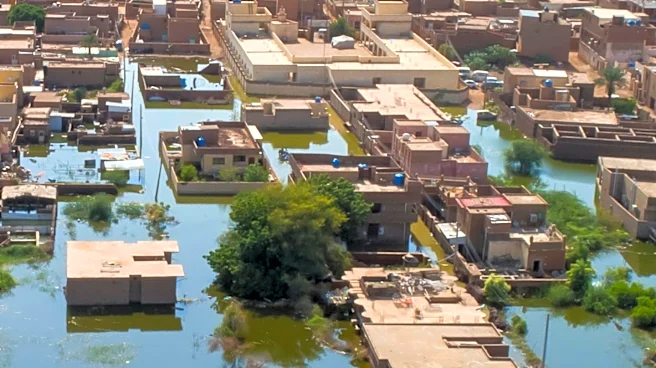
urgent flood control issues and advance regional economic development projects in Letcher County. The discussions were prompted by recent flash flood events, including Fleming-Neon experiencing two floods within 24 hours due to debris and sediment blocking waterways. Congressman Rogers emphasized the need for solutions to clear streams across the Appalachian region, particularly along the Kentucky River. Letcher County Judge-Executive Terry Adams highlighted the importance of targeted stream clearance along the North Fork of the Kentucky River to prevent recurring downstream damage. Local officials also raised concerns about delayed FEMA funding and proposed state hazard mitigation legislation. Additionally, Congressman Rogers provided updates on the proposed Letcher County Federal Correctional Institution in Roxana, which is expected to create over 300 jobs, and noted progress on a new water project in Roxana that will serve both the prison and local homes.
Why It's Important?
This initiative is crucial for the affected communities in Eastern Kentucky, which have been grappling with persistent flooding and its devastating consequences. The collaboration between federal, state, and local entities signifies a concerted effort to implement long-term solutions for flood mitigation, which could protect lives, property, and infrastructure. Addressing the challenges of debris-clogged waterways and burdensome regulations is vital for the region's resilience against future natural disasters. Furthermore, the progress on the federal correctional institution and associated water projects represents a significant economic boost for Letcher County. The creation of over 300 jobs and the provision of clean water to more than 70 homes will have a tangible positive impact on local employment and public health, contributing to the overall economic revitalization of an area that has faced economic hardships.
What's Next?
The discussions between Congressman Rogers, the Army Corps of Engineers, and local leaders indicate ongoing efforts to develop and implement flood control strategies. Further collaboration is expected to identify actionable solutions for stream clearance and address regulatory hurdles. Local officials will likely continue to advocate for expedited FEMA funding and push for state hazard mitigation legislation to better prepare for and respond to future flood events. Regarding the proposed federal correctional institution, monthly updates from the Bureau of Prisons are anticipated, with continued progress on the construction site and the associated geotechnical study by the Army Corps. The completion of the Roxana water project will also move forward, expanding access to clean water for more residents. These ongoing efforts suggest a sustained focus on both environmental resilience and economic growth in Letcher County.
Beyond the Headlines
The recurring flooding in Eastern Kentucky underscores broader issues of environmental management and infrastructure resilience in vulnerable regions. The challenges faced by local officials, including the costs and regulatory burdens associated with stream clearance, highlight the need for more flexible and responsive disaster preparedness and recovery frameworks at both state and federal levels. The discussion about delayed FEMA funding points to systemic issues in disaster relief distribution, which can exacerbate the suffering of affected communities. Moreover, the dual focus on flood mitigation and economic development, particularly through projects like the federal prison, illustrates a comprehensive approach to regional revitalization. This strategy aims not only to protect communities from immediate threats but also to foster long-term stability and opportunity, addressing the intertwined social, economic, and environmental challenges prevalent in many Appalachian communities.