



What's Happening?
NASA's Artemis II mission is set to reach the far side of the Moon within the next 24 hours, marking a historic journey further into space than any previous human mission. The mission, which launched on April 1, 2026, involves orbiting the Moon and providing
a unique view of its far side. The crew aboard the Orion spacecraft includes NASA astronauts Reid Wiseman, Victor Glover, Christina Hammock Koch, and Canadian Space Agency astronaut Jeremy Hansen. This mission is a critical step in the Artemis program, which aims to establish a sustainable human presence on the Moon.
Why It's Important?
The Artemis II mission is pivotal for testing the Orion spacecraft's life support systems and other technologies, which are essential for future lunar missions. The mission's success will inform the planning and execution of Artemis III and IV, which aim to test lunar landers and conduct moon landings. The mission also highlights the potential for international collaboration in space exploration, with contributions from the Canadian Space Agency. Additionally, the mission's focus on exploring the Moon's far side could provide new scientific insights and opportunities for future space endeavors.
What's Next?
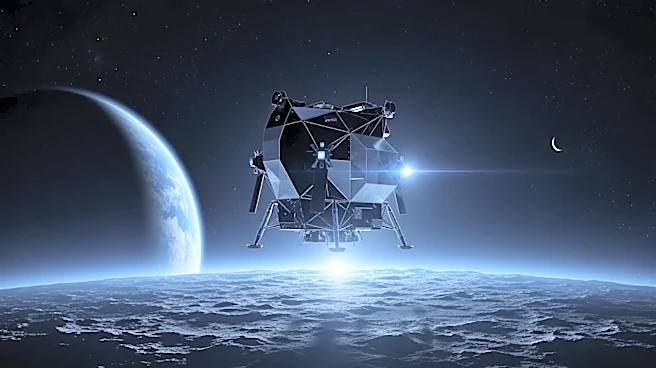
Following Artemis II, NASA plans to launch Artemis III in 2027, which will involve testing lunar landers developed by SpaceX and Blue Origin. Artemis IV, scheduled for 2028, aims to achieve a moon landing. These missions will build on the data and experience gained from Artemis II, advancing NASA's goal of establishing a sustainable human presence on the Moon. The success of these missions could also lay the groundwork for future missions to Mars and beyond.