



What's Happening?
A study published in the Proceedings of the National Academy of Sciences reveals that community rules can effectively limit forest clearing and allow trees to return in areas practicing slash-and-burn farming. Led by Sean Downey from The Ohio State University,
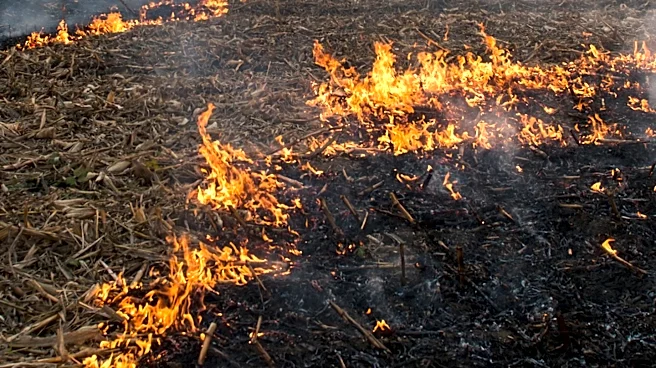
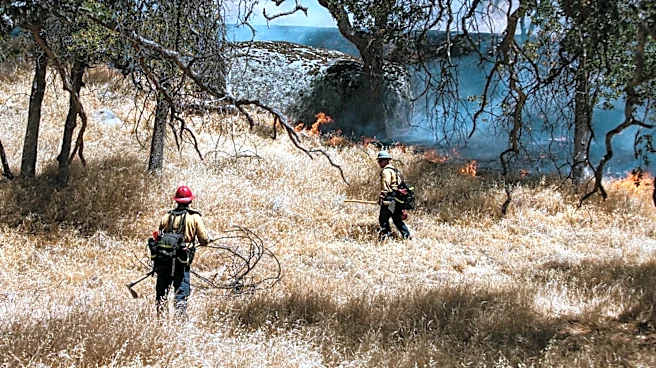
the research examined 18,000 forest patches across Central and South America, sub-Saharan Africa, and parts of Asia. The study found that unwritten social rules in small communities help manage land use sustainably, providing food while protecting long-term forest health. This practice, known as swidden agriculture, involves clearing small plots of forest, burning the vegetation to enrich the soil, and allowing the land to recover over time. The findings challenge the notion that slash-and-burn farming inherently destroys rainforests.
Why It's Important?
The study highlights the potential for traditional agricultural practices to coexist with environmental conservation. By demonstrating that community-managed slash-and-burn farming can maintain biodiversity and forest health, the research provides valuable insights for policymakers and environmentalists. It suggests that supporting local customs and social norms can be more effective than imposing external regulations. This approach could inform global climate policies and contribute to sustainable land management strategies, particularly in regions where traditional farming practices are prevalent.
What's Next?
The study's findings may encourage further research into the role of community governance in sustainable agriculture. Policymakers might consider integrating traditional practices into environmental conservation strategies, recognizing the value of local knowledge and social structures. Future initiatives could focus on supporting communities in managing their resources sustainably, potentially leading to broader adoption of these practices in other regions facing similar challenges.