
What's Happening?
Farmers in Japan are increasingly shifting their work to nighttime hours to cope with extreme heatwaves that have made daytime agricultural labor dangerous and detrimental to crops and livestock. Motoaki
Iijima, a flower farmer north of Tokyo, now harvests gerberas after sunset, a change he implemented three summers ago after a worker suffered heatstroke. Temperatures exceeding 35 degrees Celsius (95 degrees Fahrenheit) can push greenhouse interiors above 40 degrees Celsius (104 degrees Fahrenheit). This adaptation is not isolated; farmers globally, from Vietnam to Spain, are adopting similar nocturnal schedules. Japan is particularly vulnerable due to its aging farming population, with approximately 70% of farmers being 65 or older, a demographic highly susceptible to heat stress, compounded by high humidity. In 2024, a record 59 agricultural workers in Japan died from extreme heat, more than double the 2021 figure. A survey by the Japan Weather Association revealed that nearly 60% of farmers aged 20-50 had either experienced heatstroke themselves or knew someone who had, and a similar percentage had already adjusted their working hours.
Why It's Important?
The shift to nocturnal farming in Japan highlights the severe and escalating impact of climate change on global agriculture and labor practices. The rising number of heat-related deaths among agricultural workers underscores a critical public health crisis, particularly for vulnerable populations like elderly farmers. Economically, the loss of labor hours due to extreme heat is substantial; in 2024, Japan's agricultural sector lost 926 million labor hours, translating to an estimated $46 billion in lost income across all sectors, or about 1% of Japan's GDP. This economic strain affects food production, supply chains, and the livelihoods of farming communities. The need for such drastic adaptations also points to the inadequacy of traditional farming methods in the face of new climatic realities, prompting a reevaluation of agricultural infrastructure, worker safety protocols, and long-term sustainability strategies. The global nature of this phenomenon suggests that similar challenges and adaptations will become increasingly common in other regions, including the U.S., impacting food security and agricultural economies worldwide.
What's Next?
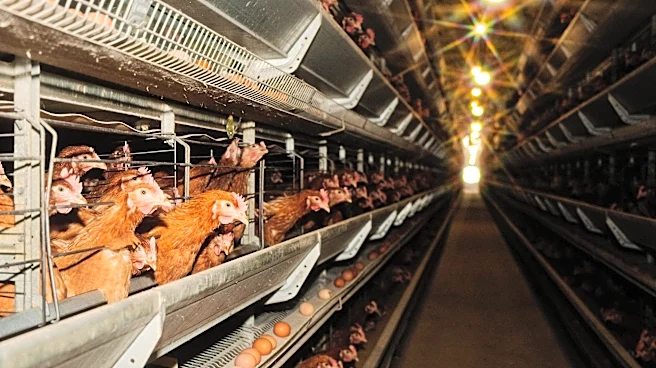
In response to the escalating crisis, the Japanese government introduced new workplace regulations in 2025, mandating employers to establish heatstroke reporting procedures and emergency response plans. Additionally, Japan is promoting smart farming technologies, such as drones and robots, to reduce workers' exposure to heat. However, for many farmers like Motoaki Iijima, adaptation remains largely manual, involving earlier starts and nighttime work. Poultry farmer Tetsuya Usuba, who lost over 500 laying hens to heatstroke six summers ago, has implemented measures like automatic barn lights at 2:30 a.m. to encourage early feeding, additional fans, and water spraying on roofs, yet still faces significant losses during sudden temperature spikes. These ongoing efforts suggest a multi-faceted approach combining policy, technology, and individual adaptation will be necessary. The long-term effectiveness of these measures will depend on their widespread adoption and continuous innovation as heatwaves intensify, potentially leading to further shifts in agricultural practices and increased investment in climate-resilient farming.
Beyond the Headlines
The necessity of nocturnal farming extends beyond immediate economic and health concerns, touching upon broader societal and cultural implications. The disruption of traditional daytime work schedules can impact community life, social interactions, and the mental well-being of farmers. The reliance on technology like drones and robots, while offering solutions, also raises questions about the future of human labor in agriculture and the potential for increased automation. Furthermore, the disproportionate impact on elderly farmers highlights a demographic vulnerability that could exacerbate labor shortages and food production challenges in countries with aging populations. This situation also brings to light the ethical considerations of ensuring safe working conditions in a rapidly changing climate, pushing for more robust governmental support and international cooperation in developing sustainable and humane agricultural practices. The shift signifies a fundamental redefinition of the agricultural landscape, where climate resilience becomes as crucial as yield optimization.