


What's Happening?
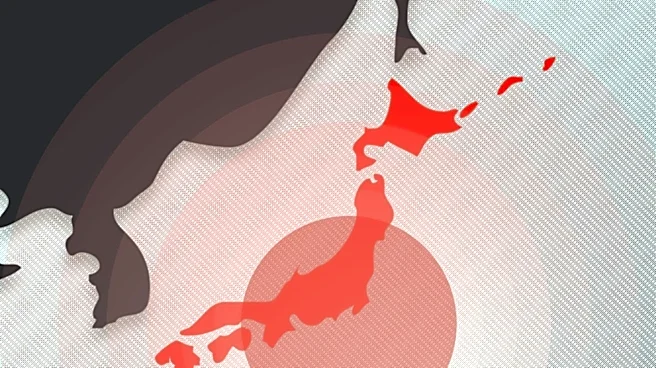
Scientists have identified renewed stress on the underwater fault responsible for Japan's devastating 2011 earthquake, according to research led by Fumiaki Tomita of Tohoku University and published in the journal Science on November 5, 2026. The fault beneath
the Japan Trench has returned to a 'locked' state, meaning the Pacific and continental plates are once again becoming stuck as they move against each other. This process allows pressure to accumulate beneath the ocean floor, potentially setting the stage for another powerful seismic event. The analysis, based on 14 years of ocean floor measurements combined with land observations, recurring earthquake data, and computer models, revealed that the slow movement along the fault after the 2011 earthquake had nearly ceased after approximately a decade. Consequently, the boundary between the plates has recovered a level of locking similar to that recorded before the 2011 disaster, which caused a magnitude 9.0 earthquake and a devastating tsunami.
Why It's Important?
This discovery carries significant implications beyond Japan, particularly for U.S. coastlines. A powerful earthquake in this region of the Pacific can generate tsunami waves capable of traveling across the ocean and affecting distant areas, including Hawaii and parts of the U.S. West Coast. The 2011 disaster demonstrated this far-reaching impact, with waves causing damage along the U.S. West Coast. The renewed activity beneath the Japan Trench raises questions about the potential threat to U.S. coastal communities. While the research does not indicate an imminent earthquake or provide a timeline for a future rupture, it highlights how quickly a fault responsible for one of the most destructive earthquakes in recent history can resume accumulating seismic energy. This finding challenges the reliance on historical intervals between major earthquakes for assessing future risks, as the recovery of the fault's locked state can occur much sooner than previously expected.
What's Next?
Continued monitoring of the ocean floor will be essential to understanding the behavior of these underwater faults and how their conditions evolve over time. Researchers emphasize the need for improved earthquake and tsunami preparedness, particularly for communities located along the Pacific coastline, including those in the United States. The new evidence underscores that the process of energy accumulation can happen more rapidly than historical data might suggest, necessitating a proactive approach to disaster readiness. Stakeholders, including government agencies, emergency services, and coastal communities, will likely need to review and potentially enhance their early warning systems and evacuation protocols in light of these findings to mitigate potential future impacts.
Beyond the Headlines
The ethical and societal implications of this research revolve around the responsibility to inform and prepare populations for potential natural disasters, even when their timing is uncertain. The renewed locking of the Japan Trench fault serves as a stark reminder of the dynamic and unpredictable nature of tectonic plate movements. It highlights the limitations of relying solely on historical recurrence intervals for risk assessment and emphasizes the importance of continuous scientific monitoring and advanced modeling. This development could also spur further international collaboration in seismic research and early warning system development across the Pacific Rim, fostering a more integrated approach to disaster mitigation. The long-term shift could be towards more adaptive and real-time risk assessment strategies, moving away from static historical models.