







What's Happening?
Research by Ph.D. candidate Patricia Kret at Leiden University reveals that ancient Roman traditions of using amulets for protection persisted and were integrated into early Christian practices for approximately 700 years, from 100 B.C.E. to 600 C.E. Despite
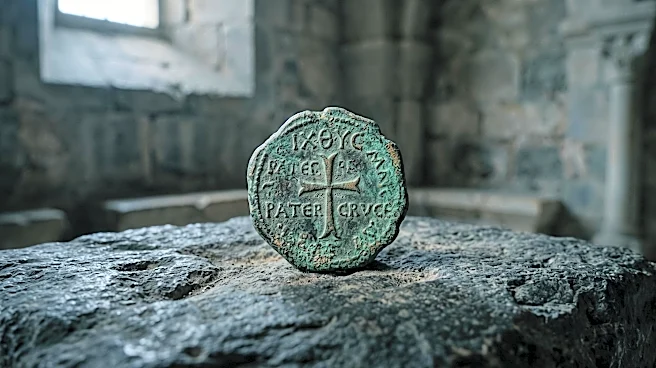
strong condemnation and threats of excommunication from bishops, these charms became a tangible part of Christian faith. Amulets were believed to offer protection against various maladies and were worn, carried, or placed in specific locations. Kret's study of around 300 amulets indicates that while the Roman gods were replaced by the Christian God, the fundamental practice of using amulets for supernatural benefits remained. Initially, the texts on the amulets changed from old invocations to biblical quotations, often copied by priests who had access to manuscripts. Over time, the designs also evolved, incorporating Christian symbols like the cross, yet retaining their original purpose of protection.
Why It's Important?
This historical phenomenon highlights the complex interplay between established cultural practices and the emergence of new religious beliefs. The persistence of amulet use within early Christianity, despite official ecclesiastical disapproval, demonstrates the deep-seated human need for tangible expressions of faith and protection. It suggests that for many early Christians, the transition to a new religion did not necessitate a complete abandonment of all prior spiritual customs. This integration of pagan practices into Christian life could have facilitated the broader adoption of Christianity by providing a sense of continuity and familiarity for converts. The fact that priests were involved in creating and potentially selling these Christianized amulets also indicates a pragmatic approach by some religious leaders to accommodate popular demand, even if it conflicted with higher-level doctrine. This historical precedent offers insights into how religious movements adapt to and are shaped by existing cultural landscapes, influencing the development of religious practices and beliefs over centuries.
What's Next?
While the immediate 'what's next' for this historical research is not explicitly detailed, the ongoing study of ancient artifacts like these amulets will likely continue to shed light on the nuanced evolution of religious practices and beliefs. Future archaeological discoveries and textual analyses could further refine our understanding of how early Christianity interacted with and absorbed elements from the Roman world. Researchers may explore the specific regional variations in amulet use and the differing attitudes of local clergy versus central ecclesiastical authorities. Additionally, this research could inspire comparative studies on how other major religions have integrated or suppressed pre-existing cultural and spiritual practices during their expansion. The findings may also contribute to broader academic discussions on the nature of religious syncretism and the social dynamics of religious change.
Beyond the Headlines
The integration of amulets into early Christian practices reveals a deeper human inclination towards seeking tangible forms of protection and connection to the divine, even within monotheistic frameworks that emphasize an abstract God. This phenomenon underscores the psychological comfort and sense of agency that such objects can provide, particularly in times of uncertainty or vulnerability. The tension between official religious doctrine and popular piety, as evidenced by the bishops' condemnations versus the widespread use of amulets, highlights a recurring theme throughout religious history. It suggests that religious institutions often grapple with the challenge of controlling and standardizing belief while accommodating the diverse spiritual needs and cultural habits of their adherents. This historical example also prompts reflection on contemporary religious practices, where various forms of symbolic objects or rituals, though perhaps not explicitly called 'amulets,' continue to play a significant role in personal faith, often existing in a delicate balance with official theological teachings.