





What's Happening?
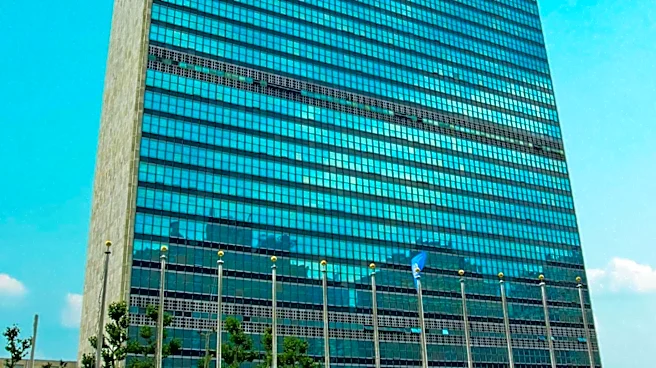
More than 50 United Nations member countries have collectively called for a complete, immediate, and unconditional ceasefire from Russia in Ukraine. This demand was made during an emergency UN Security Council meeting. The statement, read by Danish Foreign
Minister Lars Løkke Rasmussen, asserts that Russia's full-scale invasion violates the UN Charter and international law, undermining global order and threatening peace and security. The countries urged both sides to halt strikes on civilian facilities and return to negotiations to achieve a just and lasting peace. US representative to the UN Economic and Social Council, Dan Negrea, stated that the United States is prepared to play a constructive role in facilitating negotiations between Moscow and Kyiv. Ukraine's Ambassador to the UN, Andrii Melnyk, emphasized the urgent need for foreign partners to provide weapons, specifically Patriot interceptor missiles, to protect Ukrainian civilians and is initiating a global coalition to significantly increase the production of anti-ballistic interceptors.
Why It's Important?
This collective call from over 50 UN member countries underscores the international community's growing concern over the ongoing conflict in Ukraine and its broader implications for global stability. The emphasis on a complete and unconditional ceasefire highlights the humanitarian crisis and the rising civilian casualties, particularly from Russian drone strikes, as noted by UN Under-Secretary-General for Humanitarian Affairs Tom Fletcher. The United States' willingness to facilitate negotiations signals a potential diplomatic push to de-escalate the conflict, which could have significant geopolitical ramifications. Furthermore, Ukraine's plea for increased military aid, especially advanced air defense systems like Patriot missiles, and its initiative to boost anti-ballistic interceptor production, reflect a strategic shift towards enhancing defensive capabilities. This could influence defense spending and military aid policies among U.S. allies and partners, potentially leading to increased collaboration in defense manufacturing and technology sharing.
What's Next?
Following this emergency UN Security Council meeting, the immediate next steps will likely involve continued diplomatic pressure on Russia from the international community to cease hostilities. Ukraine's Ambassador to the UN, Andrii Melnyk, has called on the UN Security Council to adopt a resolution demanding Russia's immediate withdrawal and the establishment of a demilitarized zone, which could be a focal point for future discussions. The proposed global coalition to increase the production of anti-ballistic interceptors will require significant international cooperation and investment, potentially involving U.S. defense contractors and technological expertise. The U.S. commitment to facilitate negotiations between Moscow and Kyiv suggests that diplomatic channels will remain active, with potential for high-level discussions or mediation efforts. The ongoing humanitarian crisis will also necessitate continued efforts from UN agencies and international aid organizations to protect civilians and provide assistance, particularly in areas affected by drone strikes.
Beyond the Headlines
The unified stance of over 50 UN countries against Russia's actions in Ukraine extends beyond immediate ceasefire demands, touching upon fundamental principles of international law and sovereignty. The repeated assertion that Russia's invasion violates the UN Charter highlights a broader challenge to the post-World War II international order, potentially influencing future interpretations and enforcement of international law. Ukraine's urgent request for advanced air defense systems and its initiative to scale up anti-ballistic interceptor production could catalyze a re-evaluation of global defense supply chains and military readiness, particularly concerning missile defense technologies. This could lead to increased research and development in this sector, with potential long-term impacts on defense industries worldwide, including those in the U.S. The call for a demilitarized zone on the Russian side of the border, if pursued, would represent a significant and complex diplomatic undertaking with profound implications for regional security architecture and border control mechanisms.