







What's Happening?
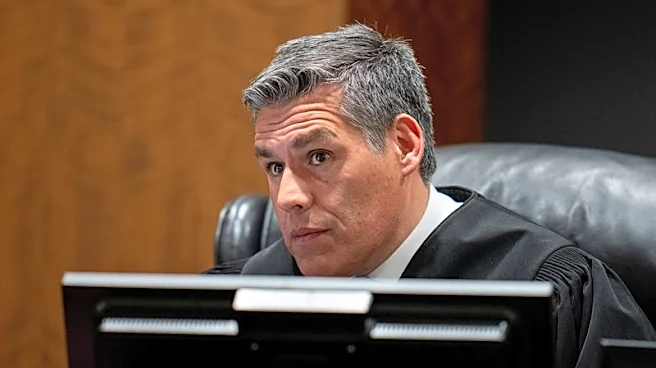
Utah Supreme Court Justice Diana Hagen has resigned following an investigation into an alleged relationship with attorney David Reymann, who was involved in a redistricting lawsuit. The investigation was initiated after Hagen's former husband accused
her of sending inappropriate text messages to Reymann. Despite the allegations, both Hagen and Reymann have denied any wrongdoing. The Judicial Conduct Commission, an independent body comprising state lawmakers, judges, and public members, conducted a preliminary investigation but decided not to pursue the matter further. In her resignation letter to Utah Governor Spencer Cox, Hagen cited the toll the investigation has taken on her family and friends as a reason for her decision to step down. She emphasized her commitment to public service and the sacrifices it entails, but expressed concern over the public scrutiny her personal life has faced.
Why It's Important?
The resignation of Justice Hagen highlights the challenges faced by public officials in maintaining personal privacy while under public scrutiny. This incident underscores the high standards and expectations placed on individuals in positions of public trust. The situation also brings attention to the complexities of judicial conduct and the processes involved in addressing allegations against judges. For the Utah judiciary, Hagen's resignation means a vacancy on the state's highest court, which Governor Cox will need to fill. This decision could impact the ideological balance of the court and influence future rulings, particularly in politically sensitive cases such as redistricting. The case also reflects broader issues of transparency and accountability within the judicial system, as well as the potential personal costs of public service.
What's Next?
Governor Spencer Cox will be responsible for appointing a new justice to the Utah Supreme Court to fill the vacancy left by Hagen's resignation. This appointment process will be closely watched, as it could affect the court's future decisions on key issues. The selection of a new justice may involve considerations of legal expertise, judicial philosophy, and the ability to withstand public scrutiny. Additionally, the case may prompt discussions within the legal community about the standards of conduct for judges and the mechanisms for addressing allegations of misconduct. The outcome of this appointment could have long-term implications for the state's legal landscape and the public's trust in the judiciary.