






What's Happening?
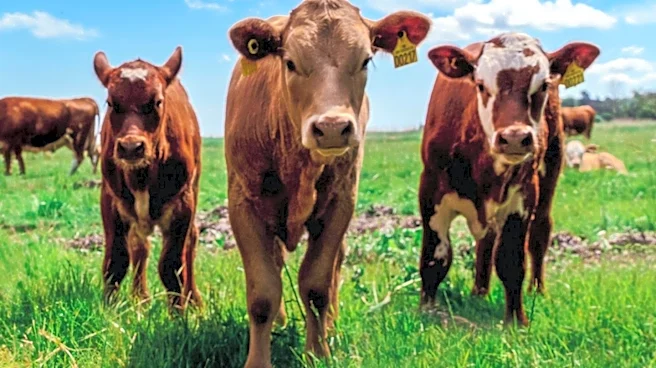
Emily Hornberger of Ohio State University Extension is urging livestock producers to prioritize forage quality over mere quantity to ensure proper animal nutrition. Many operations assess hay inventories based on tonnage, but Hornberger highlights that
cattle can consume large amounts of low-quality forage and still suffer from nutritional deficiencies, impacting their performance. A full rumen does not guarantee adequate nutrient intake. Forage analysis is presented as the crucial first step, providing vital information on crude protein, fiber levels, and total digestible nutrients. Without these metrics, farmers are left to guess if their forage meets their herds' needs. Poor-quality forage is particularly detrimental during late gestation and early lactation when nutrient demands are high, often necessitating supplementation even with ample forage. Hornberger stresses that matching forage quality to animal requirements can prevent performance losses and unnecessary feed expenses. Testing also enables farmers to group similar feedstuffs, allocating higher-quality hay to animals with greater nutritional needs, thereby improving efficiency and extending forage supplies.
Why It's Important?
The emphasis on forage quality by Ohio State University Extension is critical for the economic viability and animal welfare within the U.S. livestock industry. Inadequate nutrition, even with abundant feed, can lead to reduced milk production, slower weight gain, and compromised reproductive performance, directly impacting a farmer's bottom line. Unnecessary supplementation due to poor forage quality represents a significant, avoidable expense. By investing in forage testing, producers can optimize their feeding strategies, ensuring their animals receive the precise nutrients required for peak health and productivity. This approach not only improves herd performance but also enhances resource management, making operations more sustainable and cost-effective. Forage testing empowers farmers to make data-driven decisions, moving away from guesswork and towards a more scientific approach to livestock management, which is vital in a competitive agricultural landscape.
What's Next?
Livestock producers are encouraged to adopt forage testing as a standard practice, especially during the summer months, to evaluate newly harvested hay and plan for the upcoming feeding season. This proactive approach allows farmers to identify potential supplementation needs early and adjust their feeding programs accordingly. Educational initiatives from university extensions and agricultural organizations will likely continue to promote the benefits of forage analysis and provide resources for producers. The industry may see an increased demand for forage testing services and nutritional consulting. Furthermore, advancements in feed analysis technologies could make testing more accessible and comprehensive, further integrating data-driven nutrition into everyday farm management. The long-term trend will likely be towards more precise and efficient feeding strategies to maximize animal health and minimize input costs.
Beyond the Headlines
The focus on forage quality extends beyond immediate economic benefits, touching upon broader themes of agricultural sustainability and animal welfare. By optimizing nutrition through forage analysis, farmers can reduce waste, minimize their environmental footprint, and ensure their livestock are not just fed, but truly nourished. This approach aligns with growing consumer demand for ethically raised animals and sustainable farming practices. It also highlights the importance of scientific research and extension services in translating complex agricultural science into practical, actionable advice for farmers. The shift from quantity to quality in feed management represents a maturation of agricultural practices, where efficiency and precision become paramount. This could also spur innovation in forage production, with a focus on developing varieties that offer higher nutritional value and better digestibility for livestock.