
What's Happening?
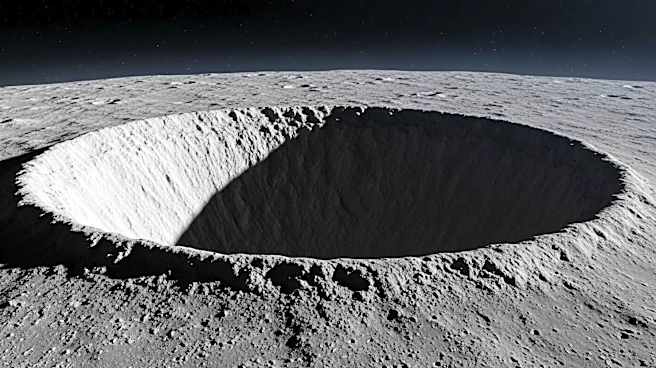
A recent study suggests that NASA's Artemis mission may explore the South Pole–Aitken (SPA) basin, the Moon's largest impact crater, believed to be formed by a differentiated asteroid. This basin, over
1,200 miles wide, is located on the Moon's far side and may contain material from deep within the Moon's mantle. Researchers from Purdue University used high-resolution 3D simulations to propose that the basin's unique shape resulted from a 160-mile-wide asteroid with a dense iron core. The Artemis mission aims to land astronauts near the lunar south pole, potentially allowing them to collect samples that could reveal the Moon's geological history.
Why It's Important?
The SPA basin is a scientifically valuable site as it may provide insights into the Moon's formation and evolution. By studying the materials ejected from the basin, scientists hope to determine its age and understand the Moon's deep interior composition. This research could answer longstanding questions about the Moon's geological history and inform future lunar exploration strategies. The findings also underscore the importance of the Artemis program in advancing lunar science and exploration, potentially leading to new discoveries about the solar system's history.
What's Next?
NASA plans to continue refining the Artemis mission's objectives and landing sites, with the SPA basin being a prime candidate for exploration. The mission's success will depend on the development of landing technologies and the ability to safely collect and return samples to Earth. As the Artemis program progresses, collaboration with international partners and continued investment in lunar exploration will be crucial to achieving its scientific goals. The potential discoveries from the SPA basin could influence future missions and expand our understanding of planetary science.