

What's Happening?
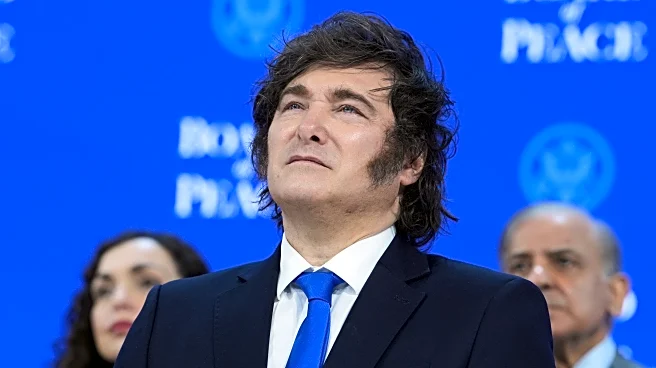
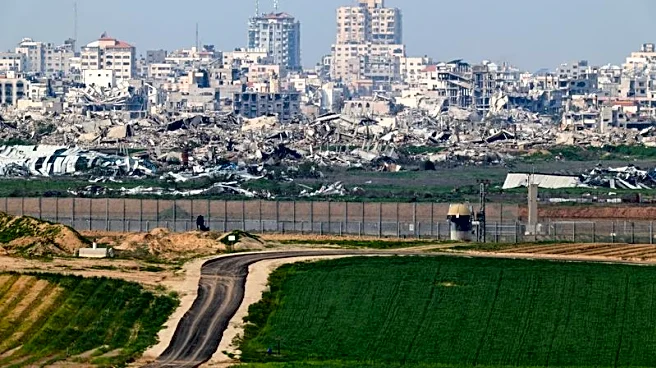
President Donald Trump has initiated a new international peace-building organization called the 'Board of Peace,' which aims to oversee the rebuilding of the Gaza Strip. The proposal includes a controversial $1 billion fee for countries seeking a permanent
seat on the board. While the U.S. official confirmed the fee, they noted that there is no requirement to contribute financially to join, with non-paying nations receiving a three-year membership. The draft charter for the board, which has not been publicly released by the White House, suggests a broader mandate than initially described, aiming to promote stability and peace in conflict-affected areas. Invitations have been sent to leaders from various countries, including Argentina, Canada, Egypt, France, Hungary, India, Italy, and Turkey. However, the proposal has faced skepticism from European leaders and criticism from Israeli officials, who were not consulted about the plan.
Why It's Important?
The creation of the 'Board of Peace' represents a significant shift in international diplomacy, potentially positioning the U.S. as a central figure in global peace-building efforts. The high cost of permanent membership raises questions about the accessibility and inclusivity of the board, potentially limiting participation to wealthier nations. This move could also challenge the traditional role of the United Nations in peacekeeping and reconstruction efforts, particularly in the Middle East. The board's focus on Gaza highlights ongoing geopolitical tensions and the complexities of international cooperation in conflict zones. The involvement of high-profile figures like Jared Kushner and Tony Blair suggests a blend of political and business interests, which may influence the board's operations and priorities.
What's Next?
The proposal's reception among international leaders will be crucial in determining the board's future. European leaders are reportedly consulting on the matter, weighing the potential benefits against the financial and political implications. Israeli Prime Minister Benjamin Netanyahu is expected to hold a cabinet meeting to discuss the board, indicating potential diplomatic tensions. The board's operational details, including its governance structure and funding mechanisms, will need to be clarified to gain broader support. As countries deliberate their participation, the board's ability to effectively address peace-building challenges in Gaza and beyond remains uncertain.