




What's Happening?
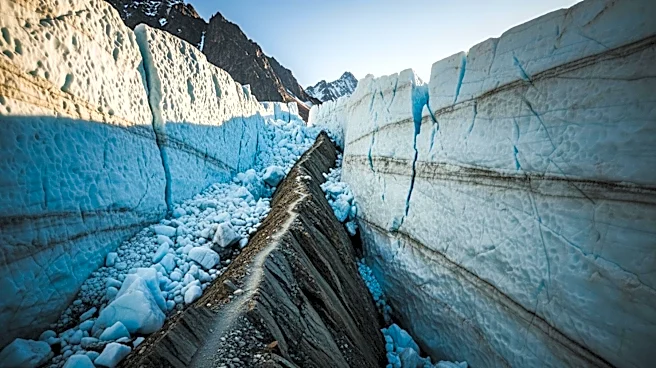
Hundreds of climbers and sherpas are currently stranded at Everest Base Camp due to a massive serac blocking the route to the summit. This serac, a large block of glacial ice, is located in the Khumbu Icefall, one of the most dangerous sections of the climb.
Icefall doctors, specialized high-altitude workers, have been unable to secure the route with ropes and ladders due to the instability of the serac. Climbers, including Bianca Adler, who aims to be the youngest Australian to summit Everest, are waiting for the serac to collapse naturally. The delay has raised concerns about potential overcrowding when the route eventually opens.
Why It's Important?
The situation highlights the increasing challenges posed by climate change on high-altitude expeditions. The instability of the serac is partly attributed to global warming, which has made the icefall more dangerous. The delay could lead to overcrowding, a persistent issue on Everest, which poses safety risks. The Nepalese government has attempted to mitigate these risks by raising climbing fees and requiring climbers to have prior experience. The current situation underscores the need for careful management of climbing seasons to ensure safety and sustainability.
What's Next?
Climbers and expedition companies are closely monitoring the serac, hoping for a natural collapse that will allow the climbing season to proceed. If the serac collapses, there will be a rush to summit, potentially leading to traffic jams. Expedition companies are strategizing to avoid such scenarios by coordinating climber rotations. The Nepalese authorities may also need to reassess their policies to manage the number of climbers and ensure safety. The situation serves as a reminder of the unpredictable nature of mountain climbing and the need for respect and caution.