



What's Happening?
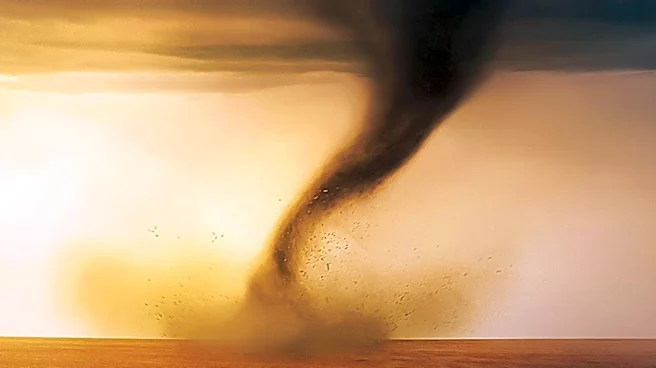
In Nashville, Tennessee, a group of volunteers known as Nashville Severe Weather is gaining attention for their real-time updates and guidance during severe weather events, particularly tornadoes. This initiative, led by Will Minkoff, Andrew Leeper, and Tom
Johnstone, utilizes social media platforms to inform the public about storm movements and safety measures. Their efforts have become increasingly important as traditional media consumption declines, especially among younger generations who prefer quick, accessible information via mobile devices. The volunteers' approach is characterized by calm, straightforward communication, which contrasts with the often sensationalized coverage by traditional media outlets. This service has become a vital resource for Nashville residents, especially as the region experiences a shift in tornado activity, with more frequent and severe storms.
Why It's Important?
The rise of Nashville Severe Weather highlights a significant shift in how people access critical information during emergencies. As tornado activity increases in the southeastern United States, the need for reliable, hyperlocal weather information becomes crucial. This volunteer-driven initiative not only fills a gap left by traditional media but also exemplifies the power of community-driven solutions in enhancing public safety. The group's ability to provide real-time, localized updates can potentially save lives by ensuring that residents are well-informed and prepared for severe weather events. Moreover, their success underscores the changing landscape of media consumption, where social media and direct communication channels are becoming primary sources of information for many, particularly younger demographics.
What's Next?
As Nashville continues to face severe weather threats, the role of Nashville Severe Weather is likely to expand. The group may explore additional platforms or technologies to reach a broader audience and enhance their service. There is also potential for collaboration with local government agencies and emergency services to integrate their updates into official communication channels. Furthermore, as the region adapts to the shifting tornado patterns, there may be increased efforts to educate the public on preparedness and safety measures. The success of this initiative could inspire similar volunteer-driven weather information services in other regions facing similar challenges.
Beyond the Headlines
The emergence of Nashville Severe Weather as a trusted source of information raises questions about the future of traditional media and the role of citizen journalism in public safety. This development highlights the potential for community-driven initiatives to complement or even replace traditional news outlets in certain contexts. Additionally, it underscores the importance of digital literacy and the ability to discern reliable information sources in an era of information overload. The group's success also points to a broader trend of decentralization in media, where individuals and small groups can leverage technology to provide essential services and foster community resilience.