







What's Happening?
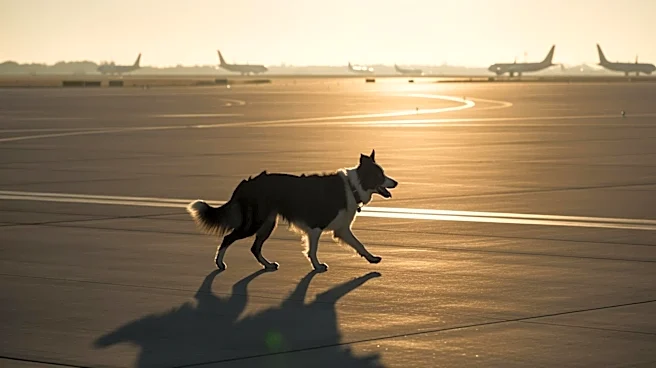
At West Virginia International Yeager Airport, border collies Hercules and Ned play a crucial role in wildlife management by reducing bird strikes, which pose a significant threat to aircraft safety. These 'wildlife canines' work five days a week, sometimes
including weekends, to clear birds and other wildlife from the airport's runways. Their efforts have led to a more than 70 percent reduction in bird strikes since their introduction. The Federal Aviation Administration has reported a significant number of wildlife strikes over the years, with 313,716 incidents between 1990 and 2024, including 25 accidents resulting in 52 human fatalities. The dogs' work is vital in preventing such incidents, ensuring the safety of planes and passengers. Hercules and Ned have gained popularity on social media, with a substantial following and merchandise available at the airport gift shop.
Why It's Important?
The use of border collies at West Virginia International Yeager Airport highlights an innovative approach to wildlife management that enhances aviation safety. Bird strikes can cause significant damage to aircraft, leading to costly repairs and potential loss of life. By effectively reducing these incidents, the dogs contribute to safer air travel and operational efficiency at the airport. Their success may encourage other airports to adopt similar strategies, potentially leading to widespread improvements in aviation safety. Additionally, the dogs' presence at the airport provides a unique and engaging experience for passengers, enhancing customer satisfaction and airport reputation.
Beyond the Headlines
The deployment of border collies for wildlife management at airports raises interesting ethical and operational considerations. It showcases the potential for non-invasive, natural methods to address environmental challenges in aviation. The dogs' work not only improves safety but also highlights the importance of considering animal behavior and welfare in operational strategies. Their success could lead to broader discussions on integrating animal-assisted methods in various industries, promoting sustainable and humane practices.