
What's Happening?
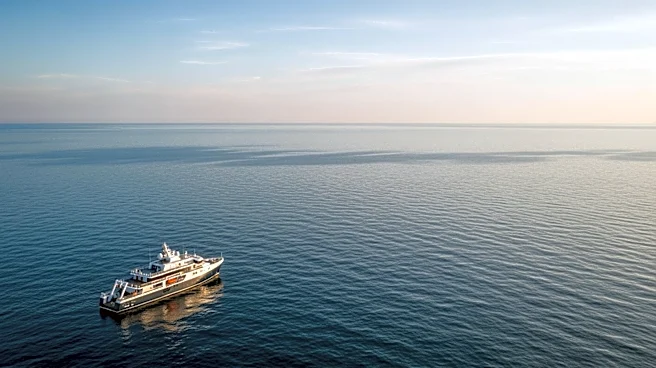
NASA's Plankton, Aerosol, Cloud, and ocean Ecosystem (PACE) Validation Science Teams conducted fieldwork off the coast of Uruguay aboard the R/V Falkor (too) from mid-November to early December 2025. The
team, based at Oregon State University, collaborated with the Symbiotic Partners and Asgard Research Cruise (SPARC) to study archaea and validate PACE satellite data. The expedition focused on measuring particulate organic carbon, phytoplankton pigments, and surface ocean optical properties to support PACE's ocean color instrument validation.
Why It's Important?
This research is crucial for improving the accuracy of satellite-based ocean observations, which are essential for understanding global climate patterns and marine ecosystems. By validating satellite data with in-situ measurements, scientists can enhance the reliability of models used to monitor ocean health and predict environmental changes. The collaboration with SPARC also provides valuable insights into the role of archaea in marine ecosystems, contributing to our understanding of biodiversity and the origins of life.
What's Next?
The data collected during this expedition will be used to refine PACE's ocean color models and improve future satellite missions. Ongoing collaboration between NASA and international research teams will continue to advance our understanding of oceanic processes and their impact on global climate. The success of this expedition may lead to further joint research efforts, expanding the scope and impact of oceanographic studies.