


What's Happening?
Middle school students across the United States are participating in the Future City Competition, where they design innovative cities of the future. The competition, which includes regional contests like the one held in Chicago, challenges students to
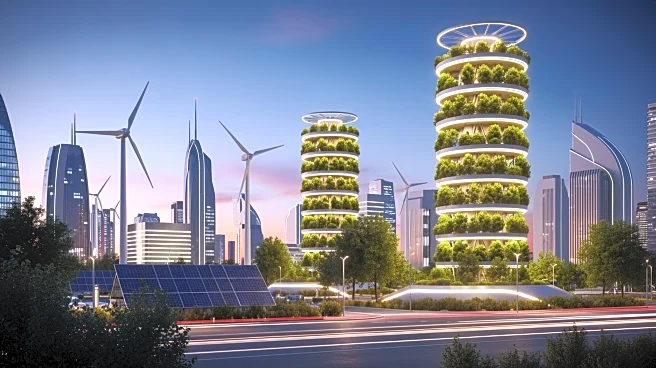
incorporate elements such as vertical farms and renewable energy into their city models. Teams are given a budget of $100 to create their models, encouraging creativity and resourcefulness. In Chicago, students from Wood Dale Junior High presented 'Maki Maki,' a city inspired by the coast of Madagascar, featuring glass silos with rotating levels for crops. The competition theme this year is 'farm-to-table,' prompting students to focus on sustainable agriculture and energy solutions. Judges, many of whom are professional engineers, evaluate the projects, and winners advance to the national competition in Washington, D.C.
Why It's Important?
The Future City Competition provides a platform for young students to engage with real-world issues such as sustainability, urban planning, and renewable energy. By encouraging students to think critically about the future of urban environments, the competition fosters interest in STEM fields and promotes innovative thinking. The focus on farm-to-table concepts and renewable energy solutions highlights the importance of sustainable practices in future city planning. This initiative not only educates students about environmental challenges but also inspires them to pursue careers in engineering and related fields, potentially shaping the next generation of problem solvers and innovators.
What's Next?
The winning team from the Chicago regional competition, Wood Dale Junior High, will compete in the national finals in Washington, D.C. This event will bring together top teams from across the country to showcase their city models and ideas. The national competition will provide further opportunities for students to interact with professionals in the engineering field and gain insights into potential career paths. As these young innovators continue to develop their ideas, they may influence future urban planning and sustainability efforts, contributing to the development of more resilient and eco-friendly cities.