





What's Happening?
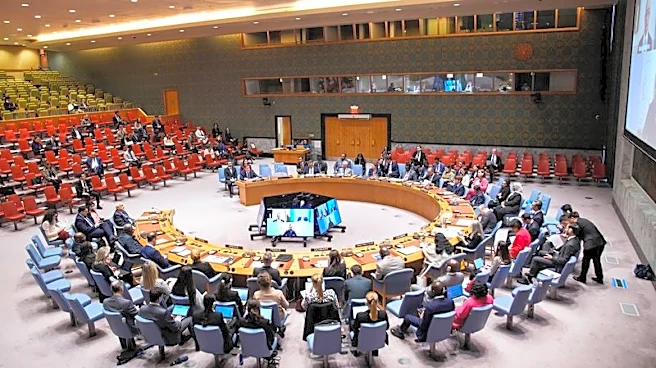
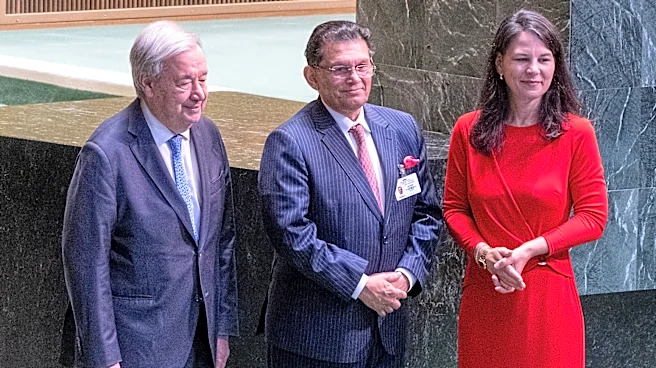
Germany's attempt to secure a rotating seat on the United Nations Security Council was unsuccessful, with the country receiving only 104 votes, falling short of the 127 needed. Portugal and Austria were elected instead, with 134 and 131 votes respectively.
The failure is attributed to Germany's strong support for Ukraine and Israel, which may have alienated some member states. Russia's opposition to Germany's candidacy, due to its support for Ukraine, also played a role. Despite the setback, Germany remains committed to multilateralism and its role in international affairs.
Why It's Important?
This development is significant as it highlights the geopolitical challenges Germany faces on the international stage. The loss is a blow to Germany's aspirations to be a leading voice in global diplomacy, especially under Chancellor Friedrich Merz's government, which has been trying to assert Germany's influence. The outcome may affect Germany's foreign policy strategies and its relationships with other countries, particularly those in the Global South, which may have been influenced by Germany's recent cuts to development aid.
What's Next?
Germany is expected to conduct a thorough analysis of the reasons behind its failure to secure the seat. This may lead to adjustments in its foreign policy and diplomatic strategies. The government will likely continue to advocate for its positions on Ukraine and Israel, while also seeking to rebuild and strengthen alliances with countries that did not support its bid. The outcome may also prompt internal political discussions about Germany's role and strategy in international affairs.