
What's Happening?
President Donald Trump has publicly disagreed with Energy Secretary Christopher Wright's prediction that gas prices will not return to $3 per gallon by the end of the year. Trump insists that prices will drop
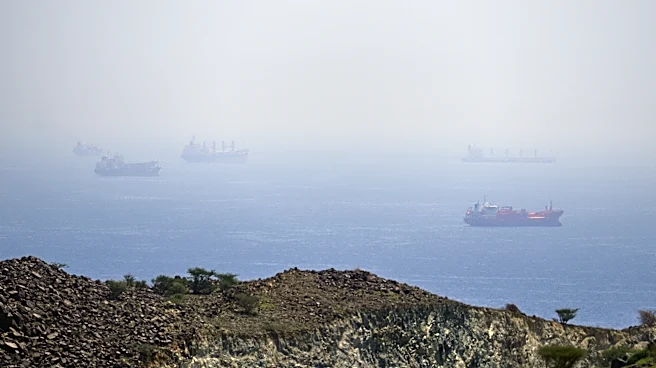
significantly once the blockade in the Strait of Hormuz is resolved. The blockade, led by Iran, has been a significant factor in the recent spike in global oil prices. Trump argues that the U.S., as a net exporter of oil, has sufficient supply and that local gas stations have raised prices based on unfounded fears of future shortages. Treasury Secretary Scott Bessent has echoed Trump's sentiments, emphasizing the need for gas stations to adjust prices downward as the situation stabilizes.
Why It's Important?
The disagreement between Trump and his Energy Secretary highlights the administration's internal challenges in managing public expectations about energy prices. The situation underscores the broader economic implications of geopolitical tensions, particularly the conflict with Iran, which has disrupted oil supply routes. The administration's handling of gas prices is crucial for maintaining public confidence and economic stability, especially as high fuel costs impact consumer spending and inflation. The outcome of this situation could influence public perception of Trump's economic policies and his administration's ability to manage international crises effectively.
What's Next?
The resolution of the Strait of Hormuz blockade will be a critical factor in determining future gas prices. The administration may need to engage in diplomatic efforts to de-escalate tensions with Iran and ensure the free flow of oil through the strait. Domestically, the government may consider measures to stabilize gas prices and prevent price gouging at the pump. The situation will require careful monitoring of global oil markets and potential adjustments to U.S. energy policies. The administration's response will likely be scrutinized by political opponents and economic analysts, impacting future policy decisions and electoral prospects.