



What's Happening?
A recent study from the University of Pittsburgh highlights the inaccuracies in the portrayal of cardiopulmonary resuscitation (CPR) on television, which could lead to public misconceptions and potentially life-threatening delays in real emergencies.
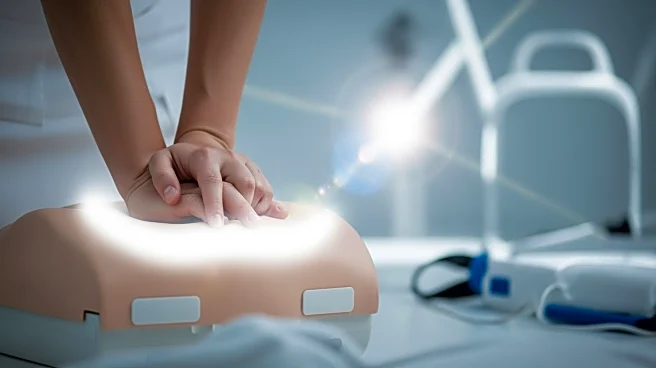
The study, published in the journal Circulation: Population and Outcomes, is the first to analyze how TV shows depict bystander CPR. It found that less than 30% of TV episodes since 2008 correctly showed the hands-only CPR method endorsed by the American Heart Association (AHA). This method, which focuses solely on chest compressions, is as effective as traditional CPR with rescue breaths. Despite this, many TV shows continue to depict outdated techniques, such as mouth-to-mouth resuscitation and pulse checks. The study also noted that TV often portrays cardiac arrest victims as younger and in public settings, whereas most real-life cases occur at home and involve older individuals.
Why It's Important?
The study underscores the critical role media plays in shaping public understanding of emergency procedures. Misleading portrayals of CPR on television could result in bystanders hesitating or performing incorrect techniques during actual cardiac emergencies, potentially costing lives. Accurate media representation is vital as it can influence public perception and readiness to perform CPR, which is crucial since most cardiac arrests occur at home. The study also highlights disparities in CPR administration, noting that women and minorities are less likely to receive bystander CPR, a reflection of both media portrayal and real-world biases. This research calls for collaboration between media creators and health experts to ensure accurate depictions, which could enhance public preparedness and save lives.
What's Next?
The study suggests that media creators and public health experts should collaborate to improve the accuracy of CPR portrayals on television. Such efforts could involve consulting with medical professionals during script development to ensure that CPR scenes reflect current best practices. Additionally, public health campaigns could leverage popular media to educate the public on the correct hands-only CPR technique. Future research could explore the impact of media portrayals on public behavior and investigate ways to address disparities in CPR administration across different demographic groups.