



What's Happening?
U.S. Commerce Secretary Howard Lutnick has publicly accused Canadian Prime Minister Mark Carney of intentionally sabotaging trade negotiations for domestic political gain. According to Lutnick, Carney introduced last-minute demands to a nearly finalized
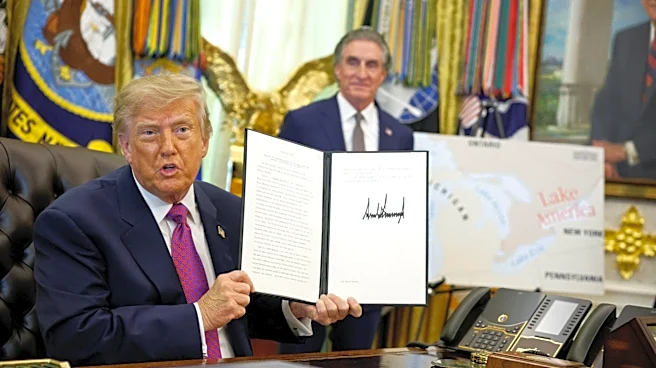
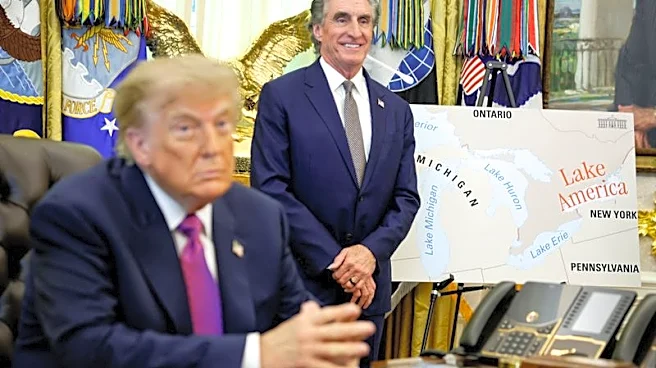
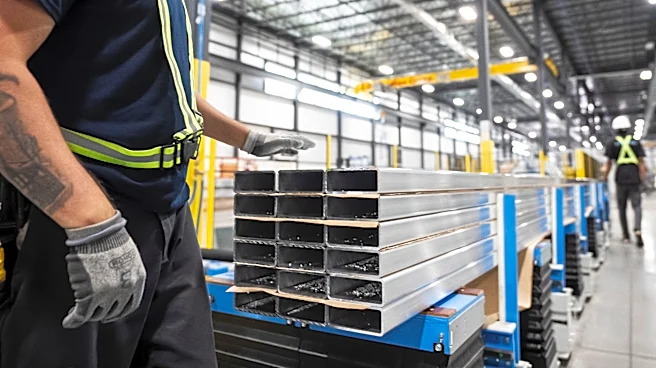
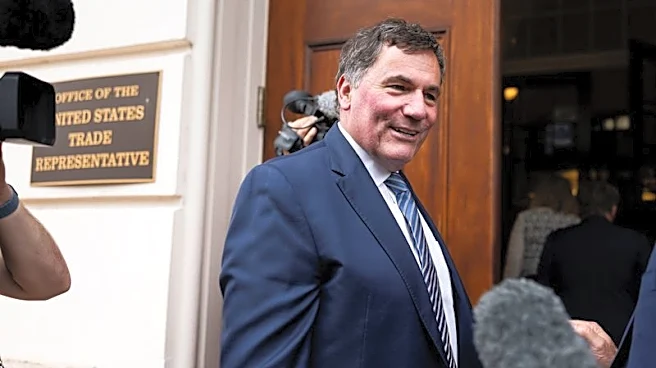
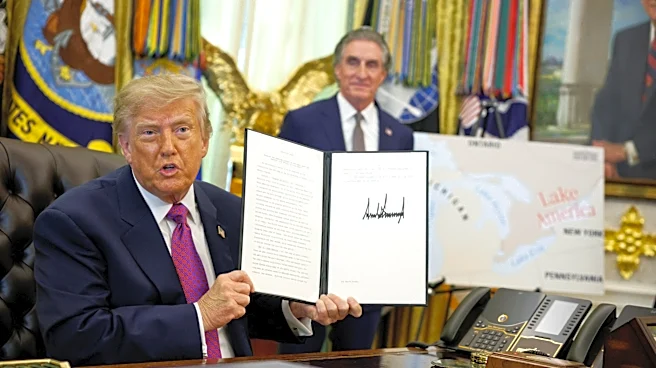
trade deal, not due to substantive disagreements, but to bolster his political standing ahead of upcoming provincial elections in Quebec and Alberta, and to address simmering sovereignty movements. Lutnick stated he had engaged extensively with Canadian officials, including two direct conversations with Carney in the final 24 hours and approximately ten meetings with Canada's Trade Minister Dominic LeBlanc over the preceding month, indicating deep U.S. engagement. The U.S. demands at the center of the collapse reportedly involved limiting tariff relief on autos, steel, aluminum, and heavy trucks, sectors where Lutnick advocates for American manufacturers. Following the breakdown, President Trump announced new tariffs on Canadian goods, to which Carney vowed Canada would respond with matching tariffs on U.S. imports, escalating trade tensions between the two nations.
Why It's Important?
This escalation in trade tensions between the U.S. and Canada carries significant implications for both economies. For the U.S., the imposition of new tariffs on Canadian goods, and Canada's retaliatory measures, will directly impact American industries reliant on cross-border trade, particularly in sectors like automotive, steel, and aluminum. Businesses in states like Kentucky, which exports $8.4 billion in goods to Canada annually, are already expressing concerns about job losses and increased costs. The breakdown of negotiations and the subsequent trade war could disrupt supply chains, raise consumer prices, and reduce market access for U.S. products in Canada. Furthermore, the accusation of political motivation behind the collapse of talks introduces an element of distrust, potentially complicating future diplomatic and trade relations. The situation also highlights the Trump administration's assertive trade policy, prioritizing protection for American manufacturers even at the risk of international trade disputes, and could set a precedent for how the U.S. approaches trade negotiations with other partners.
What's Next?
The immediate future will likely see the implementation of the announced tariffs by both the U.S. and Canada, leading to increased costs for businesses and consumers in both countries. The retaliatory tariffs from Canada are expected to match U.S. tariffs dollar-for-dollar, intensifying the trade war. Political rhetoric is also anticipated to remain heightened, with U.S. officials continuing to criticize Canada's actions and Canadian officials defending their stance against what they perceive as unfair U.S. demands. The upcoming provincial elections in Canada, particularly in Quebec and Alberta, will be closely watched as a potential factor influencing Canada's trade strategy. There is speculation that once these elections conclude, Canada might seek to re-engage in negotiations with the U.S. However, the current climate of distrust and the public accusations made by Secretary Lutnick could make a swift resolution challenging. Businesses in affected sectors will need to adapt to the new tariff landscape, potentially seeking alternative suppliers or markets, while policymakers will face pressure to mitigate the economic fallout.
Beyond the Headlines
The current trade dispute between the U.S. and Canada extends beyond immediate economic impacts, touching upon deeper issues of national sovereignty, political strategy, and the reliability of international agreements. Secretary Lutnick's accusation that Prime Minister Carney manufactured a dispute for domestic political gain underscores a growing trend in international relations where internal political considerations heavily influence foreign policy and trade decisions. This approach can erode trust between nations and make long-term, stable agreements more difficult to achieve. The U.S. administration's willingness to impose tariffs and engage in trade disputes, even with close allies, signals a significant shift in global trade dynamics, moving away from multilateralism towards more bilateral and often confrontational negotiations. This could lead to a more fragmented global trading system, where economic relationships are increasingly politicized. The episode also highlights the vulnerability of businesses and economies to political maneuvering, emphasizing the need for robust risk management strategies in an unpredictable geopolitical landscape.