






What's Happening?
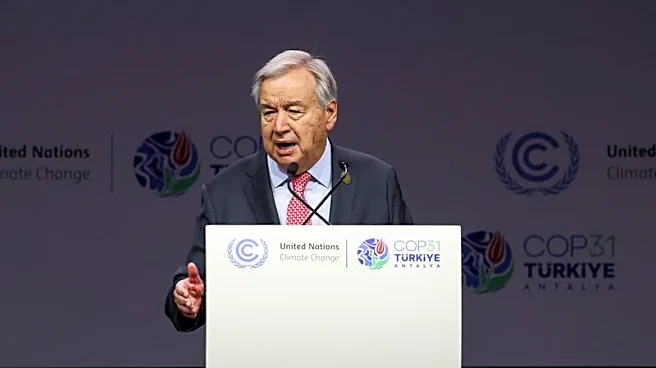
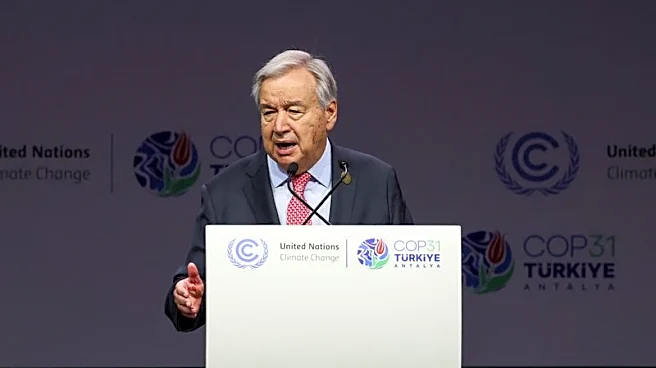
The presidents of COP30 and COP31 have jointly launched the 'Global Implementation Accelerator' (GIA) at the COP31 climate summit in Turkey. Established at COP30 in Brazil, the GIA's core mandate is to accelerate climate implementation, enhance international
cooperation, and support countries in reducing emissions and adapting to climate change, with the ultimate goal of keeping global warming limited to 1.5°C. A report published by the GIA emphasizes the critical need to 'drive the world towards essential positive tipping points.' The University of Exeter has been named the sole university partner to this initiative, contributing its expertise in tipping points research, including the 2025 Global Tipping Points Report. Professor Tim Lenton from the University of Exeter will serve on the GIA's Independent Group of Experts, ensuring that decision-making is grounded in scientific evidence.
Why It's Important?
The Global Implementation Accelerator represents a significant strategic shift in global climate action, moving beyond mere commitments to focus on rapid, real-world implementation. By specifically targeting 'positive tipping points,' the GIA aims to identify and scale solutions that can trigger exponential and cascading effects, leading to transformative change on a global scale. This approach recognizes that while adverse tipping points pose catastrophic risks, positive tipping points in human societies and economies, such as the widespread adoption of green technologies, can accelerate solutions. The partnership with the University of Exeter, a leader in tipping points research, ensures that the GIA's strategies are scientifically informed and evidence-based. This initiative is crucial for bridging the gap between climate ambition and tangible progress, offering a pathway to accelerate emissions reductions and strengthen resilience more effectively than traditional incremental approaches.
What's Next?
The GIA is now set to move into its operational phase, focusing on identifying and supporting climate solutions with the greatest potential to trigger positive tipping points in the short term. This will involve developing specific programs and partnerships to help countries implement these solutions more rapidly. The GIA's design, governance structure, and partner network, which were unveiled at COP31, will guide its initial acceleration cycles. Future steps will likely include detailed assessments of potential positive tipping points across various sectors, targeted investments in key technologies and policies, and robust monitoring frameworks to track the impact of accelerated implementation. The University of Exeter's ongoing research and expert contributions will continue to inform the GIA's strategies, ensuring that its efforts remain aligned with the latest scientific understanding of climate dynamics and societal change.
Beyond the Headlines
The concept of 'positive tipping points' introduces a powerful new paradigm into climate policy, suggesting that transformative change can be achieved not just through gradual efforts but also through strategic interventions that trigger rapid, self-reinforcing shifts. This approach has the potential to fundamentally alter how climate solutions are conceived and deployed, moving towards more dynamic and impactful strategies. It also highlights the interdisciplinary nature of climate action, integrating scientific research with policy implementation and economic development. The GIA's focus on accelerating solutions with exponential potential could foster greater innovation and investment in areas like renewable energy, sustainable agriculture, and circular economy models. This initiative could inspire a more optimistic and proactive approach to climate change, demonstrating that rapid, large-scale change is not only necessary but also achievable through targeted, evidence-based interventions.