









What's Happening?
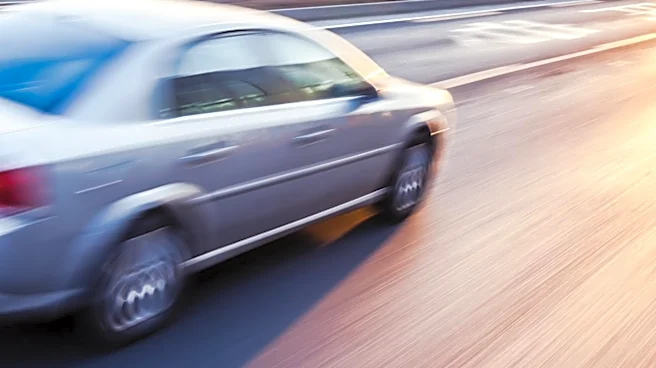
A study published in the journal Communications Sustainability reveals that driving above the speed limit offers minimal time savings while significantly increasing fuel consumption and emissions. Researchers from the University of Minnesota analyzed
120 million vehicle trips, finding that speeding saves less than a minute per day on average. However, adhering to speed limits could save millions of gallons of fuel and reduce carbon emissions significantly. The study highlights the environmental and economic benefits of driving at posted speed limits, especially amid high gas prices.
Why It's Important?
The findings underscore the potential for significant environmental and economic benefits from reducing speeding. With fuel prices high, the study suggests that adhering to speed limits could lead to substantial savings for drivers and reduce greenhouse gas emissions. This research could influence public policy and driver behavior, promoting more sustainable driving practices. The study also highlights the broader implications for energy consumption and environmental impact, contributing to discussions on climate change and transportation policy.
Beyond the Headlines
The study's implications extend beyond individual savings, suggesting potential shifts in transportation policy and public awareness campaigns. Encouraging adherence to speed limits could become a focus for environmental advocacy groups and policymakers aiming to reduce emissions and promote sustainable practices. The research also highlights the role of technology in monitoring and influencing driving behavior, potentially leading to innovations in vehicle design and traffic management systems.